Wednesday, April 13, 2011

Barra touches all the bases in Berra bio

Book 41: Yogi Berra Eternal Yankee by Allen Barra

Let's trot out the compulsory sports metaphor early in our post on Allen Barra's biography of Yankee great Yogi Berra: Allen Barra touches all the bases in his biography of Yankee great Yogi Berra.

Barra touches those bases, not with a walk here and a base hit there, but in a single grand promenade. The chief strength of his biography is that he treats Berra, not -- as many view him -- as a loveable, word-twisting buffoon, a comic interlude, but as one of the greatest Yankee ballplayers of all time. 

And -- this from someone who is definitely not a Yankee fan -- to rank among the greatest Yankees ever is to rank among the greatest baseball players ever.

Larry Berra grew up in "the Hill," an Italian-American section of St. Louis, where he enjoyed a idyllic childhood and honed his athletic skills. Before he picked up the nickname "Yogi," he was known as "Lawdie" because his mother couldn't pronounce Larry.

In 1941, Berra and childhood friend, Joe Gargiola, tried out for the Cardinals at Sportsman's Park. General Manager Branch Rickey offered Gargiola a contract and a $500 signing bonus. He reluctantly offered Yogi a contract and a $250 bonus. Yogi, who figures he's as talented as Gargiola, turned Rickey down.

A year later Yogi signs with the Yankees.  Such are the fortunes of baseball made.

Yogi professional debut is with the Norfolk Tars in the Class B Piedmont League, but his career is slowed by World War II. After receiving his draft papers, Yogi joins the Navy. He goes on to become a decorated sailor who participated in the D-Day invasion.

By 1946, Berra is back in professional ball. Now with the Newark Bears. He makes his major league debut with the Yankees in September of that year and hits a home run in first game.

That home run speaks volumes about Berra's talents as a player.  Most people today know him for his odd nickname and all those Yogi-isms -- "Half the game is 90 percent mental." "It ain't over till it's over." "If you can't imitate him, don't copy him." "You can observe a lot just by watching."

Rightfully, Barra asks, "Do we take Yogi seriously enough?"

Barra builds the case that the Yankees should observe a "Yogi Berra Era" much as there is a DiMaggio Era and a Mantle Era and a Gehrig Era.  He also argues that Yogi must be considered one of the greatest, if not the greatest, catchers in the game.

I won't devote this post to a recapitulation of Barra's arguments on Berra's behalf.  Sufficient to say, he's convinced me of Berra's stature as a player.  He hit with power and consistency, developed into a superb defensive catcher and handled a pitching staff with elegance and insight that left the pitchers with brimming with confidence and wins.

Barra provides us with a lively and insightful biography, even the appendices demand to be read. Like the battery of Ford and Berra, Barra and Berra are a match made in baseball heaven.

Sunday, April 10, 2011

The Lost Gate a mashup of Portal and American Gods

Book 40: The Lost Gate by Orson Scott Card

Orson Scott Card's new book, The Lost Gate, is mashup between Valve Software's award-winning video puzzler, Portal, and Neil Gaiman's American Gods novel.

Wholly unoriginal and written in Card's breathless prose, The Lost Gate, with its wink and a nod to sex, bathroom humor and high school hijinks, will appeal to a 13-year-old boy, but that's about the extent of the audience.

The Lost Gate is the story of Danny North, who grows up in a compound in northern Virginia.  His family are Norse gods -- emphasis on the small g. His father is Odin and his uncle, Thor. Everyone but Danny has some sort of magical powers.

Although as it turns out -- no surprise here -- Danny does have magical powers. He's a "gatemage," someone who is able to dissolve the boundaries of space. Create a tunnel opening here and another there and "voila" you are miles or worlds away. Plus, people who pass through such a gate are healed of any illness and their powers increase.

But, to channel Sam the Sham and the Pharaohs, "oh, that's good, no that's bad."

Good because a gatemage is extremely powerful. Bad because the various families of gods scattered around the world -- Danny's included -- have vowed to kill all gatemages because of some mischief by that chief gatemage and Norse trickster, Loki, centuries earlier.

Once his powers are discovered Danny is forced to flee the family compound and Card's story begins with earnest. Danny soon forges an alliance with other magically-inclined individuals who don't belong to one of the families and who do want to put Danny's powers to use. The trouble is Danny doesn't know the first thing about being a gatemage and there's a little matter of the Gate Thief, who, for centuries, has been stealing the powers of every gatemage that surfaces.

There's a host of characters and another storyline involving a gatemage in another world.  The Lost Gate is meant to be part of another book or two or three so naturally it concludes with more questions than answers.

There's far great entertainment value between Portal 2 --due out later this month -- and Gaiman's two novels, American Gods and Anansi Boys. The Lost Gate is no Ender's Game.

Saturday, April 09, 2011

Tomato Red a Woodrell classic

Book 39: Tomato Red by Daniel Woodrell

Writer Daniel Woodrell frightens me.  Not for the violence that is such a casual and accepted undercurrent in the lives of the characters who populate his novels, but for the accuracy of his observations. 

Tomato Red will be described as noir fiction, a hardboiled novel distinguished by its unsentimental portrayal of violence and sex. And it is that, but it is also a sociological study of class warfare in the tiny Ozark town of West Table, Missouri.

Americans like to believe that we are a classless society, but Woodrell knows that is far from true. He also knows that it is in the small towns that the distinctions of class are most closely felt and keenly observed. Everyone in West Table knows exactly who is above them and who is below them in society's pecking order.

And when you live in Venus Holler, like Jamalee Merridew, and your brother is country queer and your mother is the town whore, there is no one below you. It is Jamalee's desire to better herself that drives Woodrell's powerful story.

Our narrator, Sammy Barlach, an ex-con and classic loser, meets Jamalee and Jason in the course of a burglary. Fueled by drugs, Sammy clumsily breaks into a West Table mansion.  The brother and sister are already inside.  The pair break into rich folks' homes to learn their secrets, wear their clothes and to pretend they are something better.

Later, when Jamalee is ejected from the local country club where she has went to find a job, the three recruit a trio of pigs to vandalize the golf course.  In a town where the country club represents the pinnacle of social achievement, their actions trigger a series of tragic and violent events.

Woodrell is best known as the author of Winter's Bone, which was recently made into a superb film. He also wrote The Death of Sweet Mister, which is widely recognized as a noir classic. My copy of Tomato Red is a re-issue from Busted Flush Press, which was founded by the late David Thompson.

Friday, April 08, 2011

Smiley's The Georges and the Jewels is warm and wise

Book 37:  The Georges and the Jewels by Jane Smiley

I shouldn't be surprised that The Georges and the Jewels, a young adult novel by Jane Smiley, is a wonderful book.  Smiley is a terrific writer as she has demonstrated in the past with such reward-winning efforts as A Thousand Acres.

Yet, I wasn't prepared for just how much I liked this book, which is warm and tender and wise. It's the story of Abby Lovitt, a seventh-grade girl living with her parents on a California horse ranch.

Abby helps her father train the horses. The male horses are all called George and the females Jewel so that no one, especially Abby, becomes overly attached to the horses, which are quickly trained and sold. Abby's role is important because one of her father's sales tactics is to assure prospective buyers that even a little girl can ride this horse.

Smiley weaves together a complex story line. There are complications at home. Abby's parents are born again Christians and her father's intransigence has led Abby's 16-year-old brother to leave home. At school, another girl is competing for the favors of Abby's one friend and a clique of four girls also threatens her happiness.

Those stories may prove compelling to Smiley's younger readers, but it is the story lines -- and there are several -- involving horses that elevate this novel.  One of the story lines involves Ornery George, a horse that Abby declines to ride bringing her in conflict with her father, and another concerns the unexpected birth of a colt whose mothers dies soon after its birth.

Late in the novel a knowledgeable ranch hand, Jem Jarrow, strolls onto the scene.  Jem, whose approach to horse training differs greatly from Abby's father, becomes Abby's mentor and friend. The scenes involving these two, Ornery George and the colt, are evocative. A horse person, Smiley brings all her power and passion as a writer to these scenes.

My daughter, a fan of the genre, has taught me not to dismiss books merely because they have the young adult label.  With The Georges and the Jewels and, earlier this year, Mockingbird, I can only agree that this is a genre discriminating adult readers should not overlook. It is no coincidence that the genre has produced two of the finest books I have read in 2011.

Book 38: The Hangman by Louise Penny

At 87 pages, The Hangman by Louise Penny could be considered a short novella or a long short story.

Either way, it's a quick reader. Penny wrote The Hangman for Good Reads, a literacy program funded by the Canadian government.

The Hangman is a good introduction to Penny's Gamache series, although it is so brief that the full joy of a rousing Three Pines mystery is missing here.  Still, fans of the series will want to read the book, which serves as a tasty appetizer before the next Penny novel.

Wednesday, April 06, 2011

Winter in the Blood a spare and lyrical novel of Indian life

Book 36: Winter in the Blood by James Welch

Bookseller Ken Lopez describes James Welch as "one of the most important and accomplished Native American writers of the post-1968 generation."

"Welch was considered, along with Leslie Silko, one of the key writers of the first generation of the renaissance in Native American literature," said Lopez.

In the introduction to the Penguin Classic edition of Welch's first book, Winter in the Blood,  author Louise Erdrich describes the book as "a central and inspiring text to a generation of western regional and Native American writers, including me."

The novel, Erdrich writes is "a quiet American masterpiece."

A masterpiece, perhaps, but a neglected one.  Few people today are talking or writing about the work of Welch, who died in 2003. And that is unfortunate for Welch, of Blackfoot-Gros Ventre heritage, is both an important writer, and a gifted one.

Winter in the Blood is a spare and lyrical novel narrated by an unnamed 32-year-old Blackfeet Indian living on the Fort Belknap Reservation in Montana. It is a story of alienation and the search for personal meaning and identity, which draws its poetry and power from Welch's powers of close observation and gift for the telling detail. 

Readers familiar with the works of popular contemporary Indian authors such as Erdrich or Sherman Alexie would do well to explore Welch's writing. His work was valuable to this current generation of Indian writers both because it provided assurances that their stories of modern Indian life were worth telling and because he set the bar so high.

A reader doesn't necessarily need to know of Welch's importance in the Indian literary canon. He should know that Welch's is a skillful writer and masterful storyteller and that his novels, Winter in the Blood among them, make for a rewarding read.

+  +  +

The completion of Winter in the Blood advances me in a reading challenge that I have taken up in 2011.

The challenge was issued by The Roof Beam Reader. The 2011 TBR (To Be Read) Pile Challenge is to read 12 books from your to-be-read pile in 12 months. I have read four of my 12 since undertaking the challenge. This is where I stand:

1. Lonesome Dove by Larry McMurtry
2. Gone With the Wind by Margaret Mitchell
3. War and Peace by Mr. Tolstoy
4. Harry Potter and the Sorcerer's Stone by J.K. Rowling
5. The Darkness That Comes Before by R. Scott Bakker
6. Under the Dome by Stephen King
7. White Noise by Don Delillo
8. Yogi Berra Eternal Yankee by Allen Barra
9. The Welsh Girl by Peter Ho Davies
10. Winter in the Blood by James Welch
11. Human Croquet by Kate Atkinson
12. Emotionally Weird by Kate Atkinson

Alternates:
Reservation Road by John Burnham Schwartz
Tales of Burning Love by Louise Erdrich

Sunday, April 03, 2011

Boyd's The Bricklayer recalls Lee Child's The Killing Floor


Book 34: The Bricklayer by Noah Boyd

Reading Noah Boyd's debut thriller, The Bricklayer, stirred memories of 1997 and Lee Child's first Jack Reacher novel, The Killing Floor.

There are similarities between Reacher and Boyd's main character, Steve Vail. Reacher worked for the military police. Vail is a former FBI agent. Both are loners, who distrust authority. Both are have keen, analytic minds, yet are also capable of extraordinary physical feats. Both get the girl.

Which is not to suggest that Boyd's work is a mere copy of Child's. It's not, but it is in a similar vein and readers who enjoy Child's writing are certain to like Boyd's work as well.

The Bricklayer is an exceptional first novel for Boyd, a former FBI agent. While improbable (as most of these novels are), the plot is sound, the pacing strong and the characters well drawn.  Boyd displays a particularly nimble touch in the relationship between Vail and FBI Deputy Assistant Director Kate Bannon. The sexual tension, emerging in a lively banter between the two, is reminiscent of Moonlighting

He's also a fine hand at humor, which surfaces throughout the thriller.  

The second Steve Vail novel is now on the shelves and will soon make its way to the top of my reading list. I am eager to see if Boyd's second act is a good as his debut.

Book 35: The Girl in the Green Raincoat by Laura Lippman

The Girl in the Green Raincoat was originally serialized in the New York Times, which means it is both brief -- a novella, really -- and has the lovely pacing necessary for a literary work that must keep the reader returning day after day until the story's end.

It features Tess Monaghan, the Baltimore P.I., who appears in about half the novels Lippman writes. Tess is pregnant and confined to bed, setting up a Rear Window-type mystery.

Yet the mystery is incidental here. What's more important is that we learn about Tess's baby, her relationship with her boyfriend Crow and a little history of how her parents met.  Such information is critical to anyone who follows an on-going series and there's plenty here for Tess Monaghan fans until the next full-length novel.

While this slender volume is a must-read, at a mere 158 pages, it does leave readers wanting more. Much more.

Sunday, March 27, 2011

Introducing Jerry Robinson and China Miéville


Book 32: Jerry Robinson, Ambassador of Comics by N.C. Christopher Couch

I've spent more than 50 years reading and collecting comics, yet I did not know about the work of Jerry Robinson. 

There are some sound reasons for my ignorance: Robinson's best work in the field took place well before I ever held a comic in my hands. Plus, he worked for D.C. and, well, I've always made mine Marvel.

Still, I should have known. Robinson is the man who created the Joker. That's right, one of the greatest super villains of all time, sprang from the pen and the imagination of Jerry Robinson. He also created Robin, the Boy Wonder; borrowing his name and much of his attire from Robin Hood.  

Those are impressive claims to fame in the world I inhabit. Yet there's so much more to Robinson's story as N.C. Christopher Couch makes clear in Jerry Robinson Ambassador of Comics, a lush book filled with sample after sample of Robinson's work.

After working alongside Bob Kane -- yeah, that Bob Kane, the man who created Batman -- and later for Stan Lee -- yeah, that Stan Lee -- Robinson left the comic book industry to illustrate books and magazines. Still later he launched his own comic strip and, still later, he became a successful editorial cartoonist.

But wait, there's more.  Robinson played a pivotal role in the campaign to give Joe Shuster and Jerry Siegel credit for their role in creating Superman.  He became involved in human rights campaigns on behalf of jailed cartoonists overseas and helped international cartoonist find an audience in America. And he also became a historian of the comic book industry.

Robinson's body of work is impressive.  He's impressive.  A talented, creative, compassionate man. Did I say he created the Joker?

Book 33: Kraken by China Miéville

I am given to reading books that won literary awards . . . the Booker, the National Book Award, the Pulitzer, the Hugo.  It gives me a sense of the direction of current literature and introduces me to new writers.

Such was the case with China Miéville who shared the 2010 Hugo Award with Paolo Bacigalupi.  Bacigalupi for The Windup Girl. Miéville for The City, and The City. 

I haven't read that award-winning work by Miéville, but I did snag a copy of Kraken, his newest work.  And now I understand something of what the fuss is about. If The City, and The City is on par with Kraken (and I suspect it is) then Miéville is going to be around for a long time to come, and my consumption of science fiction is going to reach levels not seen in decades.

Kraken is a fast-paced novel that mixes elements of mystery, science fiction and fantasy.  A giant squid, tank and all, has disappeared from London's Natural History Museum.  As one characters says don't focus on the how, but on the why and the who. Because someone is determined to set off the apocalypse.

Our inadvertent hero is Billy Harrow, a curator at the museum.  Billy knows things he doesn't know he knows.  The Krakenists, a small cult that worship the giant squid, believe he is their prophet because he has laid hands on the squid, their god.

Billy and an exile from the squid cult (can't believe I am writing that) set off to find the kraken and forestall the end of the world. Those who come to their aide and those who oppose their efforts are a thrilling array of characters that testify to Miéville's imagination.  One murderous pair of villains and a enchanted gang leader known as The Tattoo rank among literature's creepiest supernatural characters since Dracula.

Miéville exhibits vast talent in Kraken, a tour de force of the fantastical, conjuring Lovecraft and Stross and Fringe and yet quite unlike anything else in the field today.

Saturday, March 26, 2011

Hamilton's memoir makes a reader hunger for more

Book 30: Blood, Bones & Butter by Gabrielle Hamilton

Estranged from her mother for more than 20 years, locked in a marriage that is about convenience rather than love is standard fare for a standard memoir.

But there is nothing standard about Gabrielle Hamilton's memoir, Blood, Bones & Butter.   Despite a personal life that's almost painful to read about, Hamilton has produced a book that is a joyous celebration of life; made joyous, made celebratory by her almost visceral relationship with food and its preparation.

The chef and owner of Prune restaurant in New York City, Hamilton charts her intimate relationship with food from her childhood in rural Pennsylvania to her reckless decision to open Prune.

It is in those moments when she is writing about food -- and Hamilton clearly thinks about food a great deal -- that this book is at its strongest and best.  Hamilton's passion and joy bubble forth.

Blood, Bones & Butter is the kind of book that makes you hungry for a thoughtfully prepared meal. It makes you want to dash into the kitchen and create something. It makes you want dinner reservations at Prune.

And, most of all, it makes you hunger for another book by Hamilton. It's that delicious.

Book 31: The Small Boat of Great Sorrows by Dan Fesperman

Fesperman's second book, The Small Boat of Great Sorrows, is a fast-paced, engaging thriller that charts the return of Vlado Petric, who first appeared in Fesperman's debut novel, Lie in the Dark.

Petric has been recruited by an American investigator for the war crimes tribunal at The Hague to help with a little matter in the Balkans. It's nothing much, a quick in-out and it could mean a new life for Petric, once a homicide detective, but now a heavy equipment operator at a construction site in Berlin.

Of course, nothing's ever so simple. Petric and the American are quickly ensnared in a complicated plot that involves war criminals from the past and present. Petric also uncovers tantalizing hints of his father's unsavory past. Hints that keep Petric nosing into the case even when he isn't certain he wants to know what he might uncover.

The Small Boat of Great Sorrows is a good a thriller as thrillers get. It's a engrossing, rewarding read.

Friday, March 25, 2011

Auster's Sunset Park a commanding performance that demands an encore

Book 29:  Sunset Park by Paul Auster

Few American authors writing today have as distinctive a voice as Paul Auster.

His writing is strange yet deeply illuminating.  He uses metafiction, exposing the fictional illusion as characters become aware that they are characters or dream of characters that take over the story; absurdism, in one novel his protagonist was a dog; existentialism, magical realism and other creative elements to explore our search for personal meaning and identity.

In Sunset Park, his newest novel, Auster dispenses with many of the techniques that have characterized his earlier works.  Sunset Park is more straightforward in its novelistic approach, making it more accessible to readers unfamiliar with Auster's unusual style and yet it's exploration of the human condition is no less illuminating or insightful than his earlier novels. 

Sunset Park is primarily the story of Miles Heller. Experiencing deep feelings of guilt and grief over his role in the death of his step-brother, Miles has fled his past life. He has dropped out of college and has not had any contact with his mother or father for more than seven years.

Events conspire to force Miles' return to New York. A return that he knows means that his self-imposed exile is at an end.  Miles reunites with an old friend and takes up residence with the friend and two young woman in an abandoned house in Sunset Park.

Auster explores the interior lives of all four inhabitants of the house in Sunset Park as well as Miles' mother and father.  Never interested in just the surface of things, Auster peers deep into each person's life, producing a work of substance and insight. 

If there is a shortcoming to Sunset Park, and this is a quibble only, it is that the story ends with so many questions unanswered. Sunset Park demands an encore, both because it is such a commanding performance by Auster and because there is so much more we, as readers, want to know about the lives of these characters.

Monday, March 21, 2011

The Killing of Crazy Horse superb history, superb story telling

Book 28: The Killing of Crazy Horse by Thomas Powers

My daughter noticed the book on my reading table.

"Haven't you read enough books on that subject?" she asked.

Whether that subject is Crazy Horse or Custer or the settling of the West, the answer, which must first be considered against the book itself, Thomas Powers' stunningly vigorous The Killing of Crazy Horse, is "no." Absolutely, completely, a thousand times "no."

The answer might well be different if it were a different book on the table, but Powers has taken a story familiar to so many of us and made it fresh again. The Killing of Crazy Horse is that rare work of non-fiction -- informative, yet entertaining. It is both superb history and superb story telling. 

Impeccably researched, part of the strength of this book is the approach Powers takes. An approach unlike any other author has taken.  The standard riff is to write about Crazy Horse and Custer, these two crazy kids on wildly disparate paths that are destined to intersect on the high plains of Montana. 

Custer's appearance here is little more than a cameo.  While the story, principally, belongs to the Lakota warrior Crazy Horse, Powers spends a great deal of time focusing on the soldiers (George Crook and William Philo Clark) and their Indian scouts (William Garnett and Frank Grouard) who were charged with ending the depredations of the hostile northern Indians by means either fair or foul.

Powers also delves into the relationship between Crazy Horse and Red Cloud, Woman Dress, He Dog and Little Big Man. Although Crazy Horse cared little for the power and recognition that followed his legendary exploits, other Indians leaders, including some who had been his friend since childhood, were envious of his reputation and sought to undermine his standing with the soldiers.

Undermining Crazy Horse was all too easy to do. He talked little, often letting others speak for him. He kept himself isolated, not only from the soldiers and settlers, but other Indians too. Finally, it seems clear that many soldiers -- who saw Crazy Horse as the Indian responsible for the slaughter of Custer and his troops -- wanted his death.

To re-tell a story we know so well, a story whose ending can never change, and to make it come alive again is an extraordinary feat.  Powers' prose -- stately, vibrant, colorful -- is a splendid match for this near-mythic tale of the American west.   

A story told in The Killing of Crazy Horse as if for the first time.

Wednesday, March 16, 2011

Ackroyd's The Death of King Arthur lacks passion, romance


Book 27: The Death of King Arthur by Sir Thomas Malory, retelling by Peter Ackroyd

Simon Armitage's 2008 translation of Sir Gawain and the Green Knight was a powerful and majestic work. Peter Ackroyd's retelling of Le Morte d'Arthur is a prosaic effort that reduces this legendary tale to banality.

The passion, majesty and romance of Le Morte d'Arthur are missing in The Death of King Arthur.  Yet upon reflection, perhaps the fault lies not with Ackroyd's "retelling," but in the very notion of chilvaric tradition.

In a classic contradiction, knights boast of their honor. These are men filled with overweening pride, contemptuous of women and the lower caste, who do not hesitate to engage in lies and other deceit when it serves their purpose.

The most common deceit is to hide or withhold their identity to achieve some minor end.  And, although they profess to be good Christian men, these knights do not hesitate to engage in adultery or to murder someone who stands in their way.

Lancelot is among the worst.  He professes to serve Arthur and to esteem Guinevere above all other women. Yet he does not hesitate to cuckold Arthur.  Ultimately, Lancelot and Arthur go to war against one another and, although Mordred plays a part, it is Lancelot who so weakens Arthur's army that his kingdom inevitably crumbles.

Here is a representative fight scene between Tristram and Lancelot:

"The knight with the covered shield at last spoke out. "Sir," he said, "you fight better than any knight I have ever known. What is your name?"

"I am reluctant to tell you, sir."


"Really? I will not hesitate to tell you mine."

"Then speak."
"Fair knight, my name is Sir Lancelot du Lake."

Tristram was astounded. "Sir Lancelot? Is it really you? You are the knight I love and admire most in the world."


"Now tell me your name."


"I am Tristram de Liones."


Lancelot fell to his knees. "Jesus, why are we fighting?"
My thoughts exactly. 

Perhaps the fault does not lie with Ackroyd, but with the story itself.  Senseless fighting, betrayal, adultery, cruelty, overweening pride are too much with us today to seem romantic or the stuff of great passion.

Monday, March 14, 2011

Atkinson's Human Croquet is flawed, but entertaining

Book 26: Human Croquet by Kate Atkinson

There is promise in Kate Akinson's second book, Human Croquet. Promise that only occasionally manages to escape the black hole of the book's faults.

The major problem is that Kate Atkinson is not Kurt Vonnegut Jr. In Vonnegut's celebrated novel Slaughterhouse Five the protagonist, Billy Pilgrim, becomes unstuck in time. Isobel Fairfax, the 16-year-old protagonist of Human Croquet, also appears to have become unstuck in time or, perhaps, she's been teleported to a parallel dimension. Neither Isobel nor the reader are certain at first.

As it happens, neither explanation proves true.  There is another reason that Isobel is jumping from the present to the past and the future. It has to do a with tree in the family garden.  

Whatever the explanation, the literary device that Atkinson uses to tell Isobel's story is distracting and unnecessary. As her in splendid debut novel, Behind the Scenes at the Museum, Atkinson furnishes the reader with a riveting character who has a compelling life story.  Unlike that novel, Human Croquet goes off the rails. The story is lost due to the confusion brought on by the smoke and mirrors the author conjures to tell Isobel's story.

If Atkinson had confined herself to telling Isobel's story, Human Croquet would have been a more pleasing book and a more successful one. In her zest to present the reader with a book as accomplished as her first, Atkinson over extends herself.  Inventiveness gives away to invention, creativity to an artificial construct.

If, ultimately, Human Croquet does not succeed it is because we see too much of the writer and not enough of the story, which is -- for that -- a very good story.

Isobel's mother is missing. Her father, who vanished and presumably dead, mysteriously returns after several years, a new wife in tow. Where is her mother? Why did her father vanish with no explanation? 

Human Croquet is worth reading for those answers. Atkinson's talent -- and she is one of the finest novelists writing today -- shines through.  Atkinson is particularly given to astonishing "degrees of separation." Characters are connected in ways that the reader never anticipated; ways that enrich the story and our experience. 

She is also one of only a handful of novelist who can be genuinely funny.

Fans of the lady will want to read Human Croquet, both for the story and to chart her development as a writer. Readers unfamiliar with her work are recommended to pick up Behind the Scenes at the Museum or When Will There Be Good News? Two books in which Atkinson's skill as a writer are on full display.

+ + +
The completion of Human Croquet advances me in a reading challenge that I have taken up in 2011.

The challenge was issued by The Roof Beam Reader. The 2011 TBR (To Be Read) Pile Challenge is to read 12 books from your to-be-read pile in 12 months. I have read three of my 12 since undertaking the challenge. This is where I stand:

1. Lonesome Dove by Larry McMurtry
2. Gone With the Wind by Margaret Mitchell
3. War and Peace by Mr. Tolstoy
4. Harry Potter and the Sorcerer's Stone by J.K. Rowling
5. The Darkness That Comes Before by R. Scott Bakker
6. Under the Dome by Stephen King
7. White Noise by Don Delillo
8. Yogi Berra Eternal Yankee by Allen Barra
9. The Welsh Girl by Peter Ho Davies
10. Winter in the Blood by James Welch
11. Human Croquet by Kate Atkinson
12. Emotionally Weird by Kate Atkinson

Alternates:
Reservation Road by John Burnham Schwartz
Tales of Burning Love by Louise Erdrich

Monday, March 07, 2011

Penny masterful storyteller in Bury Your Dead

Book 25:  Bury Your Dead by Louise Penny

My admiration for the novels of Louise Penny increases with every book that she writes.  

With each novel, there are six now, Penny's mastery of her characters, plot, pacing, setting and the demands of the genre has grown and developed until it is clear that she is one of the finest mystery writers working today.

Her 2010 release, Bury Your Dead, is testament to Penny's mastery of the mystery. Indeed, she doesn't give the reader only one mystery to unravel in her newest work, but three.

As the novel opens, Penny's principal character, Armand Gamache, Chief Inspector of the Sûreté du Québec, is visiting an old friend in Quebec. It soon becomes clear that Gamache is recovering from physical and psychological wounds suffered in a devastating attack in which Gamache's second-in-command Jean Guy Beauvoir was also injured and other Sûreté officers killed.

The story behind the attack, which haunts Gamache, unfolds through the course of the novel.  Naturally, Gamache is also reluctantly caught up in a murder in Quebec.

The third storyline involves Jean Guy who is sent to the village of Three Pines to reopen the murder investigation of the Hermit, who was killed in Penny's preceding novel, The Brutal Telling.

From Quebec to Three Pines, from the present to the past, Penny skillfully interweaves the three story lines into a single compelling story of singular skill and artistry.

Friday, March 04, 2011

Confessions on an infatuation with an 11-year-old girl

Book 24:  A Red Herring Without Mustard by Alan Bradley

I suppose that I should be cautious in admitting my infatuation with an 11-year-old girl. But there it is.

Fortunately, the girl, Flavia de Luce, is the fictional creation of Alan Bradley. A Red Herring Without Mustard is the third novel to feature Flavia, who is something of an amateur sleuth. 

In this book, a vicious attack on a gypsy woman Flavia has befriended is followed by a murder, which revolves around a burglary ring that's stealing antiques, replacing them with knockoffs and selling the originals.

The plot is secondary. In these novels, a delicious twist on the English cozy, the crime -- generally murder -- serves largely as a device to engage young Flavia, who is a piece of work.

As mentioned, Flavia is an amateur sleuth. She's also a talented amateur chemist with her own laboratory in a wing of the family home.  In a passage that captures Flavia perfectly, she's made nauseous by the odors emanating from a hospital cafeteria, but finds the smells wafting from the hospital morgue quite enchanting.

Flavia is also 11 years old to the core. She gets around on her trusty bicycle and is given to skinned knees and soiled dresses. She also delights in annoying her two older sisters, generally with some clever chemical concoction, but she's not above stealing the chocolates left on the doorstep by a besotted suitor.

Bradley's series is delightful. The three books -- a fourth has been announced -- have each been a thoroughly delicious read.  
 

Wednesday, March 02, 2011

Faulks on Fiction is lively, accessible and informed

Book 23: Faulks on Fiction by Sebastian Faulks

Faulks on Fiction is like nothing so much as auditing a college class taught by your favorite professor about your favorite books.

It is a lively, accessible and informed survey of some of the best known characters in British literature.  My one disappointment in reading it is that I'm not aware of a similar work on behalf of American writers and their creations.

Faulks wrote this series of essays, which he wanted to call Novel People, as a companion to a BBC television series. The book (and presumably the TV series) is divided into four parts -- heroes, lovers, snobs and villains.  The structure isn't altogether necessary and a less obsessive-compulsive reader than I should feel free to read as their interest or whimsy leads them.  

The essays range from long-established characters -- Mr. Darcy, Tom Jones, Pip, Fagin and Emma -- to more current creations such as Chanu Ahmed from Monica Ali's Brick Lane and Barbara Covett from Zoe Heller's Notes on a Scandal.  

Popular literature is also explored.  There's a fascinating essay on James Bond, who is found among the snobs. In 2008, at the behest of the Fleming estate, Faulks wrote a new James Bond novel. His insights on his research into the character and Fleming's style of writing are fascinating.

Any lover of literature is bound to enjoy Faulks on Fiction.  And, like me, they're going to be eager for the TV show.

Tuesday, March 01, 2011

Prince of Nothing trilogy is two books too many

Books 21 & 22:  The Warrior Prophet and The Thousandfold Thought by R. Scott Bakker. 

My sons will be disappointed, but I did not much care for R. Scott Bakker's Prince of Nothing trilogy.

The trilogy begins with The Darkness That Comes Before, continues in The Warrior Prophet and concludes in The Thousandfold Thought. Although it doesn't really conclude after three books and 1,600 pages.  Bakker has already completed the first book in a second trilogy, and one can only assume a third trilogy will follow that.

Which is part of the reason that I'm not a fan of the current crop of fantasy series. These authors don't know when to stop.  Tolkien gave us The Hobbit and then three books in The Lord of the Rings series, and that was that.  Today's it's a lifetime enterprise.

But that's a minor quibble.  Let me quickly list a few of the reasons I cannot fully embrace Bakker's work:

It's murky, especially in the second and third books.  It feels to me that Bakker loses control of his material. The result is that it's often difficult to understand exactly what's taken place or why.

Bakker's philosophical musings kill the narrative.  What I want most is a story, a rollicking narrative that's totally absorbing. I found that at times in The Darkness That Comes Before where the pace and action were crisp and absorbing.  But in the books that followed, the quasi-religious, mystical components weighed down the narrative.  Hell, there were times that the story came to complete halt.

I am troubled by the Consult.  1) They appear to be an alien race, and, for me, that intrudes upon a story of sword of sorcery. 2) Their sexual deviancy is a disturbing and unnecessary storyline.

Kellhus, the Warrior-Prophet, the Prince of Nothing, etc., etc., is a sociopath. In an epic such as this, Kellhus needs to be a hero, someone larger than life. I understand that Achamian is the true hero of this story, but Kellhus' role when placed against the overall context of the story demands that he be something more than a manipulative "other."

The bottom line is that there is too much that I don't like compared to parts I admire. I will say that Achamian's story line is intriguing and his growth as a character is the best part of the entire series. I'd like to see what Bakker will do with Akka going forward, but I don't believe I care enough to read another book, certainly not another three books.

Friday, February 18, 2011

Early reader


Photos often need little explanation. This suffices here: my granddaughter reading.

Thursday, February 17, 2011

Snared by The Darkness That Comes Before; a reading challenge update

Book 20: The Darkness That Comes Before by R. Scott Bakker

As a rule I avoid the fantasy series by such prolific authors as Robert Jordan and George R. R. Martin. I am put off by the impossible to pronounce names of characters as well as the length of the individual books that stretch into yet another book and yet another.

So how did I find myself in my current situation? I just finished reading The Darkness That Comes Before by R. Scott Bakker. I find myself 577 pages into his The Prince of Nothing series and I still have two books to read.

How did I wind up in this situation? My oldest son sent me the series as a Christmas present. My youngest is thrilled, waxing enthusiastically about the characters in this fantasy trilogy that he claims is his “favorite.”

The call of blood must be answered.

Yet, I admit to some reluctance even after I started reading. The convention for a fantasy series of this nature demands that the significance of the book’s opening be murky. Who is this man? His mission? Who are these people? What is this world? How the fuck do you pronounce this name?

Yet within 100 pages, perhaps fewer, I found myself totally absorbed by this story of a great Holy War, of magicians and mighty barbarian warriors. Bakker’s feat in fashioning this world and this cast of characters is impressive. The book is totally absorbing and, despite its vast size, a quick read because of the author’s skill in pacing and in storytelling.

So much so that I within minutes of taking down book one I have taken up book two.

And as with me, so with you, there is more to come, my friends, Much more. In the fullness of time.

+ + +

The completion of The Darkness That Comes Before advances me in two reading challenges that I have taken up in 2011.

The first challenge was issued by The Roof Beam Reader. The 2011 TBR (To Be Read) Pile Challenge is to read 12 books from your to-be-read pile in 12 months. I have read two of my 12 since undertaking the challenge. This is where I stand:

1. Lonesome Dove by Larry McMurtry
2. Gone With the Wind by Margaret Mitchell
3. War and Peace by Mr. Tolstoy
4. Harry Potter and the Sorcerer's Stone by J.K. Rowling
5. The Darkness That Comes Before by R. Scott Bakker
6. Under the Dome by Stephen King
7. White Noise by Don Delillo
8. Yogi Berra Eternal Yankee by Allen Barra
9. The Welsh Girl by Peter Ho Davies
10. Winter in the Blood by James Welch
11. Human Croquet by Kate Atkinson
12. Emotionally Weird by Kate Atkinson

Alternates:
Reservation Road by John Burnham Schwartz
Tales of Burning Love by Louise Erdrich

Further progress in this challenge awaits the completion of Bakker’s Prince of Nothing series.

The second challenge is the Chunkster Challenge, specifically the “Mor-book-ly Obese Challenge. I am attempting to reading eight books all with a minimum page count of 450 pages and three of those eight must be at least 750 pages.

Larry McMurtry’s Lonesome Dove weighed in at more than 900 pages. Bakker’s The Darkness That Comes Before (paperbound) was 577 pages (not counting appendices).

Six books remaining in this challenge, two of more than 750 pages.

Tuesday, February 15, 2011

National Book Festival to be Two-Day Event, Sept. 24-25

February 7, 2011

The 11th annual National Book Festival, organized and sponsored by the Library of Congress, will become a two-day event this year. The festival will be held on the National Mall between 9th and 14th Streets on Saturday, Sept. 24, 2011, from 10 a.m. to 5:30 p.m. and on Sunday, Sept. 25 from 1 p.m. to 5:30 p.m., rain or shine. The event is free and open to the public.

Several festival-related events will take place in the weeks preceding the beloved yearly festival, which celebrates the joys of books and reading. More information will be posted as planning for the festival continues at the festival’s website, www.loc.gov/bookfest.

"Fans of the National Book Festival have urged us to make it a weekend-long event for many years," said Librarian of Congress James H. Billington.

"Last September, during our wonderful 10th-anniversary celebration, we crossed the threshold of a million festival-goers over the life of the festival – and we look forward to welcoming millions more festival-goers of all ages for many years to come," Billington said. Some 150,000 book fans attended the festival of 2010.
The 2011 National Book Festival will feature award-winning authors, poets and illustrators in several pavilions dedicated to categories of literature. Festival-goers can meet and hear firsthand from their favorite authors, get books signed, have photos taken with mascots and storybook characters and participate in a variety of learning activities.

The Pavilion of the States will represent reading- and library-promotion programs and literary events in all 50 states, the District of Columbia and the U.S. trusts and territories.

The popular Let’s Read America Pavilion will offer reading activities that are fun for the whole family. The Library of Congress Pavilion will showcase the cultural treasures to be found in the Library’s vast online collections and offer information about popular Library programs.

The 2011 National Book Festival will be made possible through the support of David Rubenstein, co-chairman of the National Book Festival Board and many other generous supporters.

The Library of Congress, the nation’s oldest federal cultural institution, is the world’s preeminent reservoir of knowledge, providing unparalleled collections and integrated resources to Congress and the American people. Many of the Library’s rich resources and treasures may be accessed through the Library’s website, www.loc.gov, and via interactive exhibitions on myLOC.gov.

Sunday, February 13, 2011

Swamplandia!, Running the Books and Known to Evil


Book 17: Swamplandia! by Karen Russell

I confess, I don't get it.  Swamplandia! by Karen Russell that is.

Oh, I understand the pre-publication hype that accompanied this novel. Russell is one of those "20 Under 40" writers chosen by The New Yorker as the new literary vanguard. 

Yet, for me, the reality of the novel doesn't meet its expectations.

Swamplandia! is the story of the Bigtree family. There's mom and dad, Hilola and Chief, and their three children, Kiwi, Osceola and Ava.  The family, who live on an island, run a little tourist attraction. Hilola wrestles gators and dives into a pit full of the creatures.  Chief is the master of ceremonies, while the children perform various functions from selling popcorn to helping with the lights.

The enterprise falls on hard times when Hilola dies of cancer. Kiwi and Chief head to the mainland. Both seeking work to help offset the family's mountain of debt. Chief finds employment in a nearby casino, while Kiwi goes to work for the World of Darkness, a newly opened amusement park that's pulled all the tourist away from the gators.

Ava and Ossie are left to sort for themselves on the island.  Ossie falls in love with a ghost and later elopes with her immaterial lover. Ava, accompanied by a weird island Bird Man, sets off to rescue Ossie from the depths of the underworld. She learns, of course, to no one's surprise that there is no ghost or no underworld, but that hell is here on earth.

Russell's snarky take on the tourists who visit Swamplandia! and the World of Darkness reveal the influence of Jonathan Franzen.  I also thought of John Irving while reading this novel.  Remember Irving's ongoing fascination with bears and wrestlers? Here's its gators and ghosts.

It's difficult to understand exactly what Swamplandia! is meant to add up to.  A longish story on Louis Thanksgiving, the dead Dredgeman that Ossie's fallen in love with, takes up a chunk of the novel.  Otherwise, it's Ava in pursuit of the missing Ossie, cameos by the Chief and Kiwi learning to swap insults with the best of them while adjusting to life on the mainland.

I didn't much like Swamplandia! or its gator or ghosts.

 Book 18: Running the Books by Avi Steinberg

Based on its subtitle, "The Adventures of an Accidental Prison Librarian," I expected more about books in Running the Books. Books play a role, but a minor one.

Running the Books is really a memoir of a Harvard-educated Jewish nerd's experience working in a Boston prison library for two years. 

So much of the book seems predictable: conflicts with the guards, developing inappropriately close relationships with a few of the prisoners and prisoners who make lavish plans for their future only to be gunned down on the outside or fall victim to the drugs that landed them in prison in the beginning.

Running the Books falls short of being a compelling work. The best that can be said is that it's mildly interesting.

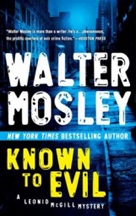
Book 19: Known to Evil by Walter Mosley

Leonid McGill, the reluctant hero of Walter Mosley's Known to Evil, is one of Mosley's best characters in many years.

Once a "fixer" for the New York underworld, McGill is attempting to go straight, launching a new career as a P.I.   But McGill's past, and the people that populated it, have a way of holding on.  They're either asking favors of McGill or he's having to turn to them for favors as he unravels the current mystery or protects his family from their own misdeeds.

The mystery at the heart of Known to Evil,  why someone is trying to kill a New York college girl, is merely a framework for these shady figures from McGill's past to re-enter his life.  All of which provides a satisfying friction as McGill is forced to make choices he thought he'd put behind him.

When Mosley truly devotes himself fully to the thriller, he's as good as any genre writer today. Known to Evil displays Mosley's talent at its fullest and finest.