Saturday, August 26, 2006

The Whole World Over a terrific second book

77. The Whole World Over, Julia Glass. Fiction, 8-24, p. 509

Second books are not supposed to be this good.

Julia Glass emerged as something of a literary phenomena in 2002 when her first book, Three Junes, came out of nowhere to win the National Book Award. It was a very good book. The Whole World Over is better.

Cinematic in its construction, The Whole World Over focuses on the intersecting lives of four characters: Greenie, a talented baker and chef who leaves New York and her husband for New Mexico; Alan, Greenie’s unhappy husband; Walter, a gay restaurant owner looking for love and stability; and Saga a physically and mentally broken young women.

There’s nothing ground-breaking in the themes Glass explores – loss, love, the consequences of the choices we make and have made for us. The power of The Whole World Over is in the fondness we develop for Glass’ vivid characters, both major and minor. We’d like to sit in Walter’s restaurant, eat a slice of Greenie’s cake or sit in her kitchen in the cool morning as she bakes. Glass' success, and it is considerable, is that her characters inhabit a larger world than the pages of her book. They also inhabit our imagination.

Thursday, August 24, 2006

Three blurbs on three books

I should feel bad, I know. I haven't posted to this site in weeks. And I would feel bad if I weren’t so far behind in my reading that I can’t seriously considering blogging. Vacation (three baseball games in three days in three states), a temporary re-location (from Washington to Chicago) and new work responsibilities have taken its toll. I normally read a minimum of 100 pages a day, yet when I look at my book list I finished James Lee Burke’s Pegasus Descending on August 3rd and its taken until the 24th to finish another novel. I’ll address that novel soon, but until then I have three blurbs for three books.

74. Pegasus Descending, James Lee Burke. Fiction, 8-3, p. 356

This won’t be well received, but I’m going to write it any way. I’m giving up on James Lee Burke. I think his novels have become derivative . . . of James Lee Burke. Reading his newest novel I have the distinct sense that I’ve read it all before. It seems lately that Burke takes the same characters, scenes, settings, even phrases, tosses them into the blender of his word processor and a new novel emerges. I think I’m even more disappointed that his main character, Dave Robicheaux, never changes. Dave is supposed to be a smart guy, but he keeps repeating the same mistakes from book to book to book. Dave and the novels he appears in have become tiresome, formulaic and disappointing.

75. Francis Crick Discoverer of the Genetic Code, Matt Ridley. Biography, 8-3, p. 210

HarperColllins’ Eminent Lives series – a collection of brief biographies of a diverse group of notables – is a worthy successor to the Penguin Lives series. Matt Ridley’s biography of Francis Crick is an entertaining and informative read. Crick is an interesting figure, notable, if for no other reason, in that he was brilliant without being eccentric. As with any book about science or math (at least for me), the particulars challenge my comprehension, yet it is amazing how much of DNA and its components – the double helix, the sequence of the amino acid residues in proteins, the four types of nucleotides (adenine, cytosine, guanine and thymine) – are remotely familiar.

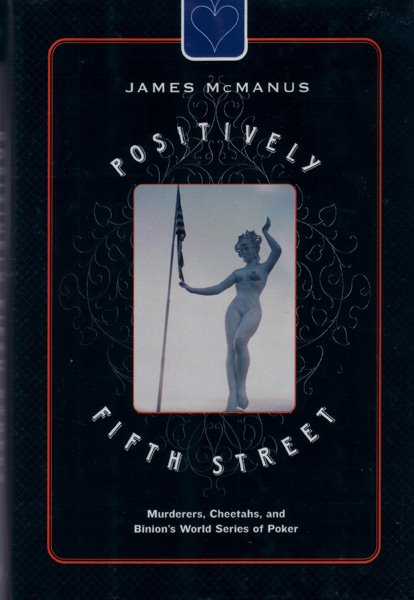
76. Positively Fifth Street, James McManus. Poker, 8-16, p. 385

James McManus’ highly entertaining Positively Fifth Street is a minor classic in the small, but fascinating genre of books devoted to poker. McManus wrote his book just before the sport(?) became a cultural phenomenon due to ESPN’s broadcast of the World Series of Poker. McManus went to Vegas to write an article for Harper’s magazine on the Ted Binion murder trial (of Binion's Horseshoe Casino fame) and the recent success of women in what had been an exclusive all-male club. A gambler at heart (“the heart of a cliff diver”), McManus blows part of his advance from Harper’s on a qualifying tournament for the WSOP. He not only qualifies for the WSOP, but reaches the final table; a stunning accomplishment for an amateur player. In addition to his coverage of the murder trial and a riveting account of his tournament play, McManus ponders his justification for a lap dance (research) and the psychological and emotional motivations of the gambler. Let’s just you can equate risk with sexual excitement, losing with sexual excitement, winning with sexual excitement and sexual excitement with, well, cards, chips and nubile, young lap dancers. Masturbation plays a role in there somewhere, too. Just read the book – it’s the nuts.


Monday, August 07, 2006

A Reading List

I’ve been “tagged” to develop a book list by responding to nine questions. So, here goes:

  1. One book that changed your life:

The Road Less Traveled, Scott Peck

  1. One book that you’ve read more than once:

My Antonia, Willa Cather

  1. One book you’d want on a deserted island:

Let’s stretch one into three: Tolkien’s Rings trilogy.

  1. One book that made you laugh:

Just about any book by Bill Bryson. The same is true of Carl Hiaasen. Lucky You comes to mind.

  1. One book that made you cry (or feel really sad):

Bambi did it. More recently, Ian McEwan’s Atonement.

  1. One book that you wish had been written:

On Writing: My Life As a Novelist by Biblio Baggins.

  1. One book that you wish had never been written:

Mein Kampf, Adolph Hitler.

  1. One book you’re currently reading:

Positively Fifth Street, James McManus. The Whole World Over, Julia Glass.

  1. One book you’ve been meaning to read:

Love’s Labour’s Lost, William Shakespeare.

Wednesday, August 02, 2006

Talk, Talk the Peggy Lee of novels

73. Talk, Talk, T.C. Boyle. Fiction, 7-31, p. 340

T.C. Boyle’s Talk, Talk is the Peggy Lee of novels – it leaves you asking, “Is that all there is?”

It’s the ending that’s disappointing, especially because Boyle’s takes the reader on a stomach-churning ride of anxiety and anger in the first couple of hundred pages. The opening, when the novel’s protagonist, Dana Halter, is hauled to jail, is particularly squirm inducing. It is Boyle’s skill at enlisting our identification with and sympathy for Dana, who is deaf, that makes his finish feel so incomplete. Cast in today’s psychobabble: There’s resolution, but not closure.

Dana is the victim of an especially pernicious form of identity theft that includes the theft of her “base identifiers.” In effect, the thief has adopted her identity as his own. An outraged Dana and her boyfriend, Bridger, track down the thief, following him as he flees from California to New York. The thief, whose real name is Peck Wilson, is off-the-charts disgusting. A former restaurateur, he’s smooth and smart and displays genuinely good taste in food, clothes and cars. He also exudes a sense of entitlement and has very real anger management issues.

Dana and Bridger ultimately confront the wayward Peck outside his mother’s home in upstate New York. Bridger winds up hospitalized, while Peck – incensed by this violation of his privacy (I said he had an air of entitlement) – stalks Dana, determined to exact his revenge, setting up a final confrontation.

But the conclusion, which the reader has been anticipating since the early pages of the novel, is flat and unsatisfying. Boyle mails this one in. I know that he can do better (see Drop City). After I’d put down the book, I wanted to call in Carl Hiaasen to wrap this one up. No one – absolutely no one – punishes their bad guys in a more satisfying manner than Hiaasen. And to this reader, that’s what was needed here. Someone needed to put a hurting on this creep.

Guardian blogger: Reading is Hot

Sarah Crown, who blogs for the Guardian, reveals the conclusion to an Internet survey conducted for Borders: Reading is hot. According to Crown, A third of those surveyed said that they "would consider flirting with someone based on their choice of literature."

"Not just any book will do," Crown writes. "Erotic fiction, horror, self-help books and the dreaded chick-lit were all, in fact, deemed turn-offs when it came to love between the covers. The genre most likely to help you pull - the itsy-bitsy-teeny-weeny yellow polka dot bikini of the books world - is the classics, followed by biography and modern literary fiction (think Zadie Smith and Sebastian Faulks, rather than Dan Brown and Martina Cole)."

Monday, July 31, 2006

Taylor's A Summons to Memphis a finely drawn tale of upper crust manners and mores

71. A Summons to Memphis, Peter Taylor. Fiction, 7-27, p. 209

Violent emotions seethe beneath a veneer of manners and mores in Peter Taylor’s A Summons to Memphis. The 1986 novel of a proper, but perverse Memphis family won Taylor the Pulitzer Prize and was the capstone of a lengthy literary career.

Echoes of Edith Wharton reverberate throughout Taylor’s work. Both authors bring a surgeon’s skill, an artist’s sensitivity and a sociologist’s remove to their writing as they peel back the customs of the upper class to reveal the passions that lurk below the surface.

Wharton explored the mannered cruelties of Old New York. Taylor dissects the honeyed machinations of the Old South. In particular, he explores and exposes the conventions of the Memphis upper crust, whose traditions, manner of dress and speech display subtle, but important, variations from that of their counterparts in Nashville or Richmond, Lexington or Louisville.

A Summons to Memphis is the story of the Carver family; the father, George, and his three adult children, two daughters and a son. The children nurse unspoken hurts and resentments against their father – a needy despot whose rigid, unbending control over his family seems to extend from cradle to grave and which is always portrayed as well-meaning and in the children’s interest.

Their resentment begins in childhood when the family is uprooted from a comfortable life in Nashville and reluctantly relocated to Memphis because of the father’s need for a fresh start in business. As the children age, resentment turns to anger as prospective engagements and budding romances are quietly, but cruelly, ended.

The anger lies buried, surfacing only in the most passive of expressions, until, soon after their mother’s death, the father, now quite elderly, contemplates a second marriage. Faced with the loss of their inheritance, alongside their empty, unfulfilled lives, the children take action.

It is not giving too much away to say that the marriage never takes place. The story is not about the aborted marriage, but in how the grown children use the conventions of Memphis high society to take revenge on their self-absorbed father. Ultimately, there are no winners in this finely drawn novel, only survivors.

A Summons to Memphis was Taylor’s penultimate book. A final collection of short stories appeared in 1993. Taylor died a year later in Charlottesville, Virginia.

72. A Death In Belmont, Sebastian Junger. Non-Fiction, 7-28, p. 260

It would have made a fine magazine article.

Thursday, July 27, 2006

Fantasyland a dream read

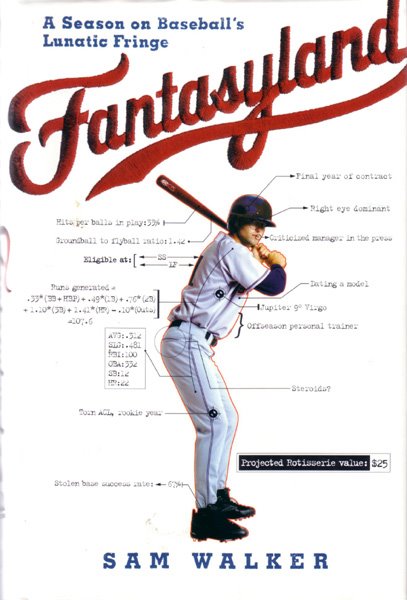
70. Fantasyland, Sam Walker. Baseball, 7-25p. 344

Books on baseball are generally reserved for deepest winter as a vital aid in recalling sun-drenched fields, an expanse of the greenest grass and the bluest sky. Intrigued by the premise of Sam Walker’s Fantasyland, I slipped the book onto the top of my reading list in July rather than January. It was the right thing to do. Fantasyland, a season in the trenches of the arcane world of Rotisserie League Baseball, would have been of no assistance whatsoever in summoning images of summer in the bleak mid-winter. Instead, this account of a game within the game proved a delightful distraction from baseball’s current off-field mischief and misdeeds.

Walker, a writer for the Wall Street Journal, competes in Tout Wars – an annual competition among the so-called experts of fantasy baseball. Walker doesn’t simply want to write about the experience, he wants to win. He also views the opportunity as “a noble experiment. A chance to determine, once and for all, which device was better at predicting a ballplayer’s performance: the laptop or the human eye, cold, hard data or gut hunches and intuition.”

To assist him in the process, Walker hires a NASA biomathematician, who has a master’s degrees in mathematical modeling and human-factors engineering, and an employee in a produce warehouse, who is given to researching obscure biographical details about major league ballplayers. He recruits a woman who specializes in horoscopes for ballplayers and shamelessly enlists a sexy actress friend to play the role of a photographer at the annual league draft. Her mission, in which she succeeds admirably, is to distract the other team owners, while Walker executes his pre-draft game plan.

Is Walker’s game plan a success? Is soulless number-crunching or seat-of-the-pants intuition a better device for building a baseball team? The answers to these questions, which are answered to varying degrees in Fantasyland, are less important than the journey. Walker’s behind-the-curtains view of the fantasy leagues is always fascinating and often laugh-out-loud funny. It’s an excellent, and unusual, addition to the canon of baseball literature.

Tuesday, July 25, 2006

Peter Robinson's Piece of My Heart a perfect summer read

68. Piece of My Heart, Peter Robinson. Thriller, 7-23, p. 436

The best of today’s thrillers succeed because the recurring characters are like old friends. We’ve been with them through up and downs, shootings and near death, divorce, marriage, love affairs, problems with their spouse, children and co-workers. This is never more true than with Peter Robinson’s fully realized character, Chief Inspector Alan Banks.

In Playing With Fire, Robinson’s 2004 novel, Banks lost his lovely cottage in the Dales to fire. In the 2005 novel Strange Affair, Banks’ brother was murdered. In Robinson’s most recent work, Piece of My Heart, the most traumatic events confronting the Chief Inspector are mundane in comparison -- a run-in with his new superior and his son and his girl friend move in for an indefinite period of time.

Instead, we have parallel stories –a violent murder of a young woman at a rock concert in 1969 and, almost 40 years later, the bludgeoning death of a young rock journalist – that ultimately converge around a popular, local band that’s achieved international fame, the Mad Hatters.

It’s an ideal story for Robinson. Music has always played a part in his novels. We understand a great deal about Banks through the music he enjoys and his son is the member of a successful rock band. Robinson, along with Michael Connelly, Ian Rankin, George Pelecanos and Robert Crais, is one of our best writers in the genre today.

Piece of My Heart is the perfect summer read.

69. Manhattan Noir, ed. Lawrence Block. Short stories, 7-24, p. 257

This is the third book in Akashic Books’ City Noir series that I’ve read. I didn’t like this collection nearly as well as I did D.C. Noir or Baltimore Noir. This was true largely, not because of the stories I liked, and there were several, but because of the stories I didn’t like. In particular, I didn’t think the story, The Organ Grinder, by the husband and wife team, Maan Meyers, really belonged in this collection.

Saturday, July 22, 2006

James A. Garfield: The slow and unnecessary death of an American president

67. James A. Garfield, Ira Rutkow. Biography, 7-18, p. 139

The most recent entry in Times Books’ American Presidents Series, Ira Rutkow’s biography of James A. Garfield, is a petite volume, even by the standards of this series. It weighs in at a tidy 139 pages.

The brevity of Rutkow’s biography is understandable considering the all-to-brief arc of Garfield’s presidency. Elected in 1880, the Ohioan was inaugurated on March 4, 1881, shot on July 2 and died two and one-half months later on September 19.

Rutkow neatly summarizes Garfield’s early years, Civil War experience and Congressional career in the first 40 pages. It takes only another 40 pages to portray the “private” Garfield and to recount the machinations that led to his nomination on the 36th ballot of the Republican convention, his subsequent election and the early days of his administration.

Nearly half the book is given over to the assassination attempt, the dismal state of Nineteenth Century American medicine and the cruel 80 days of suffering Garfield experienced before he succumbed. Rutkow makes a convincing argument that Garfield’s wound need not have been fatal, rather it was the inadequate and improper treatment he received that led to his death.

Charles Guiteau, the frustrated office-seeker who shot Garfield, even used this argument in his legal defense. “Guiteau relentlessly rehashed the case for medical mistreatment,” Rutkow writes. Guiteau admitted shooting the president, but noted that weeks after the assassination attempt a team of physicians concluded the president would recover. “Therefore, according to Guiteau’s rationale, ‘The doctors who mistreated him ought to bear the odium of his death, and not his assailant.’”

In a fascinating summation, Rutkow notes that almost 100 years later, in 1981, President Ronald Reagan suffered far more serious wounds at the hands of an would-be assassin. Yet because of the advances in medical care, Reagan was on his feet within 24 hours and returned to the White House, “fully able to conduct the nation’s business,” within 11 days.

In addition to being a published author, Rutkow is a clinical professor of surgery at the University of Medicine and Dentistry of New Jersey. His professional insight into Garfield’s treatment and into the state of American medicine in 1881 makes this an intriguing and exceptional read.

It is impossible to accurately appraise Garfield’s standing among American presidents; his tenure was all to brief. Rutkow observes that the 1883 passage of the Pendleton Civil Service Reform Act is a fitting memorial to Garfield, but acknowledges his accomplishments as president were few. “James Abram Garfield’s presidency,” Rutkow writes, “is reduced to a tantalizing ‘what if.’”

Sunday, July 16, 2006

By A Slow River a novel of rare insight and beauty

“Life is strange. It doesn’t give you warnings. It jumbles everything so you can’t pick and choose, and bloody moments follow moments of grace, just like that. It can make you wonder if man isn’t like one of those pebbles that lie on the road, lying in the same place for entire days until someone kicks it and sends it sailing through the air for no reason. And what can a pebble do?”

--By A Slow River (p. 115), Philippe Claudel


66. By A Slow River, Philippe Claudel. Fiction, 7-15, p. 194

By A Slow River, by French writer Philippe Claudel, is a haunting and lyrical novel. Set in an obscure French village during World War I, it is a story of loss and regret.

The war rages nearby, at once remote and immediate. Remote because of a hill that separates the village from the front line. “But for the hill, we would have had the war right in our faces . . . By the grace of the hill we managed to dodge it . . .” The distant explosions of the battles arrive “deadened and decanted.”

The village is further insulated from the war by the town factory. “Our men kept the factory going and the factory kept them. An order was handed down from on high . . . all workers were reserved for essential civilian service. And so at least eight hundred strapping local lads would escape the raging guns . . . Eight hundred who in the eyes of some were never men at all . . . “

And so the war does make its way into the village. It arrives with a steady two-way stream of men; it is seen in the eyes of the healthy soldiers who march forlornly to the front and it is felt most keenly in the silence of the wounded as they are carted, like so much detritus, to the rear.

Along with the soldiers’ cruel judgment, death also enters the village. A lovely schoolteacher is founded hanged with no explanation for her suicide. A 10-year-old beauty is found strangled, her body discarded in a canal that winds alongside the factory.

These two deaths are enveloped in mystery. As he labors to uncover the secrets behind the mysteries, the local policeman finds himself probing the mysteries of the human heart, including his own: “Despaiux was waiting for my answer. He stood before me, his contempt growing as I sat there, looking back at him—and beyond him—into the emptiness where I alone could see Clémence. He pulled his hat down and turned his back on me without saying good-bye. He walked off. He went home to his regrets and left me to mine. No doubt he knew—as I do—that you can live in regrets as in a country.”

Few novels contain the clarity and penetrating power of By A Slow River. It is an exquisite novel of rare beauty – in its prose and in its insight.

Friday, July 14, 2006

A visit to Des Moines book sale prep site

Business trips often contain unexpected pleasures.

Usually, for me, that means a side trip to a local bookstore. This week, in Des Moines, it was something totally different. I received a behind-the-scenes tour of preparations for Planned Parenthood’s annual book sale.

It’s easily the largest book sale in the Midwest. The tables are filled with more than 500,000 books, which are moved from the prep site to the sale site in six semi trucks.

This year the sale is September 14-18 at the 4-H State Fairgrounds.

Preparation for the sale, now held twice a year, goes on throughout the year. It all takes place in a building that was once a warehouse. It’s air conditioned; a previous building wasn’t.

Donations are received at the same building where the books are processed. It’s set up so that books can be left 24/7.

Donated books are sorted by volunteers, tossed into shopping carts and trundled off to other volunteers who evaluate and price the books. Volunteers have established areas of expertise; the woman who processes and prices romance books has gone so far as to identify about a dozen popular authors and, as much as possible, she puts all the books by each of these authors together. Her efforts have vastly increased sales in this category.

Once books have been priced, they are boxed by category. There’s a designation on the exterior of each box that indicates the exact table at the sale site where the box belongs. This expedites the process of setting up the sale site--organizers indicated that what once took 10 days now takes two.

In addition to the books there are magazines, records, DVDs and video tapes and puzzles. Other items are also donated, leading organizers to establish a garage sale of sorts in addition to the sale of books and related material.

An interesting feature at the sale itself is a storage area. Anyone buying large quantities of book can drop off their boxes and have those books processed for sale, while they continue to shop. In the past, organizers said they would often be tallying up a dealer’s purchases into the morning hours. Now, both purchaser and volunteer, get to go home at a more reasonable hour.

Thursday, July 13, 2006

Four Reads, Four Recommendations

  • 62. The Night Gardener, George Pelecanos. Thriller, 7-5, p. 371
  • 63. The Places In Between, Rory Stewart. Non-Fiction, 7-8, p. 297
  • 64. No Good Deeds, Laura Lippman. Thriller, 7-10, p. 343
  • 65. Heat, Bill Buford. Cooking, 7-13, p. 315

Four books, four recommendations.

Pelecanos’ The Night Gardener will be available in early August. It’s worth the wait. It’s vintage Pelecanos with many of his familiar themes.

The central story has to do with a cop, a retired cop and a former cop who are all trying to solve the murder of young man whose body is found in a community garden. To all appearances, the crime is connected with three murders that occurred 10 years earlier.

There’s complications, and that’s what makes the story so entertaining. The cop, Gus Ramone, knows the young man who was murdered and his family. The former cop left the force to evade a morals charge as a result of an investigation launched by Ramone.

This could be predictable stuff in a lot of writers hands, but not with Pelecanos who forces the men to closely examine their own lives, with surprising, but satisfying results.

There’s are a couple of secondary stories that briefly intersect with the main story of Ramone and the murder in the community garden.

It’s a taut, well-told thriller. If you have not read Pelecanos he should be at the top of your reading pile. He belongs with Michael Connelly, Robert Crais and Ian Rankin on the short-list of the genre’s best.

+++

The Places In Between is Rory Stewart’s account of his walk across Afghanistan in 2002. It falls somewhere between a travelogue, a political analysis, a religious analysis and cultural anthropology.

In many respects, it is a simple book. Stewart walks, stays the night with locals and walks again. But, of course, it’s Afghanistan and nothing is simple. It is a blighted, impoverished land. The people are poor (Stewart is grateful if an evening meal includes an egg or scraps of meat), and illiterate, wary, but not unwelcoming. The medieval landscape is littered with landmines and Kalashnikov-carrying Afghanis.

The book’s power is in Stewart’s ability to show and not to judge. He furnishes us with a insightful and sensitive portrayal of Afghanistan and its people, helps us to understand its religious conflicts and shares pieces of its ancient history. It is a remarkable work of literature and courage.

+++

My first introduction to Laura Lippman, which came in April, was Every Secret Thing. I wasn’t swept away, but that book was a one-off, not featuring her trademark P.I. Tess Monaghan. I've since read two books featuring Monaghan and she's won me. Rather, they-- Lippman and Monaghan -- have won me over.

Lippman’s newest book, No Good Deeds, is just a fun read. There’s a subset of the thriller in which the author piles so much adversity, trouble and woe upon her main character that you wonder how shey will ever extract herself from her misfortune. That’s what happens to Tess in No Good Deeds.

You know, Monaghan will turn things around, but you never know exactly how until it happens. Lippman does a superb job of keeping the surprises hidden until she springs them on the reader. It’s the perfect summer book.

+++

Heat is Bill Buford’s second book. His first, Among the Thugs, is a classic among books on soccer. Heat may well become a classic of the cooking school of literature.

The book is comparable on many levels to Anthony Bourdain’s Kitchen Confidential. Buford, an editor for The New Yorker, takes a job in the kitchen of Mario Batali’s three-star New York restaurant, Babbo. He undergoes an array of indignities and mistreatment, but keeps coming back, improving his skills as a cook.

While reading Heat you alternate between never wanting to dine out again and not being able to wait to dine out again, preferrably at Babbo. The book's ultimate success may be that Buford leaves you pondering a foray into the kitchen to fire up some elusive recipe for yourself.

Authors announced for National Book Festival

The 2006 National Book Festival, organized and sponsored by the Library of Congress and hosted by Mrs. Laura Bush, will befrom 10 a.m. to 5 p.m. on Saturday, Sept. 30, on the National Mall in Washington, D.C., between 7th and 14th streets (rain or shine). The festival is free and open to the public.

“Each year, tens of thousands book lovers attend this national event to meet their favorite authors and celebrate lifelong literacy, which we are also highlighting in a partnership with the Ad Council” said Librarian of Congress James H. Billington. “Now in its sixth year, the National Book Festival presents a wonderful opportunity to see firsthand how reading changes lives and how our country, its citizens and its libraries promote reading in imaginative and inspiring ways."

“The National Book Festival is a great way for families and friends to share in the joys of reading and discover the works of some of America’s most-loved authors,” Mrs. Bush said. “Readers of all ages can listen to and meet their favorite writers and enjoy a day on the National Mall.”

At the 2006 National Book Festival, more than 70 well-known authors, illustrators and poets will discuss their work in various pavilions, including “Children,” “Teens & Children,” “Fiction & Fantasy,” “Mysteries & Thrillers,” “History & Biography,” “Home & Family” and “Poetry.”

Festival goers can have books signed by their favorite authors, and children can meet ever-popular storybook and television characters, such as Arthur The Aardvark, Maya and Clifford the Big Red Dog, who will appear on the festival grounds throughout the day.

Participating authors include best-selling novelists Khaled Hosseini, author of the “Kite Runner” and Geraldine Brooks, winner of the 2006 Pulitzer Prize for her book “March”; novelist and essayist Joan Didion; historians John Hope Franklin and Doris Kearns Goodwin; biographer Taylor Branch (“Martin Luther King”); Kai Bird and Martin Sherwin, winners of the 2006 Pulitzer Prize for their biography of J. Robert Oppenheimer; authors of books for children and teens, including Andrew Clements, Stephenie Meyer, Richard Peck, and Louis Sachar; award-winning illustrators Bryan Collier, Betsy Lewin and Mark Teague; Donald Hall, the recently named 14th Poet Laureate of the United States; and poet Dana Gioia, the director the National Endowment for the Arts; best-selling mystery and thriller authors, including Michael Connelly, Lisa Scottoline, Kathy Reichs and Alexander McCall Smith; science fiction award-winner Spider Robinson; and Elmer Kelton, author of more than 40 novels and voted “the best Western author of all time” by the Western Writers of America.

Popular personalities in the “Home & Family” pavilion include television celebrity chefs and authors G. Garvin and Marcus Samuelsson; CNBC economics and investments commentator Jim Cramer and popular linguistics expert Deborah Tannen, whose new best-seller is titled “You’re Wearing That? Understanding Mothers and Daughters in Conversation.”

Beyond meeting their favorite authors, festival visitors will have the opportunity to learn about the reading programs and resources in libraries across the country. The “Pavilion of the States” will highlight the book, reading, literacy and library promotion activities of all 50 states, the District of Columbia and several American trusts and territories. Representatives from every state and territory will welcome families and children interested in that state's writers and reading programs. In addition, the “Let’s Read America” pavilion will feature reading promotion activities developed by select festival sponsors.

The Library of Congress Pavilion will feature a variety of interactive family-centered activities about the importance of lifelong literacy, cultural preservation, and preserving digital culture. Computers will be available for children and adults to explore the Library’s acclaimed Web site at www.loc.gov.

The Library’s myriad online resources contain examples of American creativity in all forms such as music, poetry, films, photographs, maps, and sound recordings. The Library’s new National Audiovisual Conservation Center will introduce the latest technologies in film and audio preservation.

The Veterans History Project will also feature a teacher and her students who use VHP material in the classroom. Two students will interview Ezra Hill, a Tuskegee Airman. VHP historian Tom Weiner will interview Darlene Iskra, the first woman to command a ship in the U.S. Navy and serve during the Persian Gulf War.

In the “Teens and Children” pavilion, the national student winners of the Letters About Literature contest will read their personal letters to authors who inspired them. Sponsored by the Library’s Center for the Book with support from distinguished benefactor Target, Letters About Literature invites young readers in grades 4-12 to write personal letters to authors, past or present, who have changed their views of the world or of themselves. Each year, winners are selected at the state and national levels. As the project’s corporate sponsor, Target awards the six national winners and their parents with a trip to the National Book Festival in Washington, to share their winning letters with a national audience.

“It is inspiring to see the number of young people whose lives have been positively affected by a particular author or book,” said Laysha Ward, vice president, community relations, Target. “Through its comprehensive support of early childhood reading, including the Letters About Literature program and the National Book Festival, Target is helping to instill a love of reading in kids as the foundation for lifelong learning.”

In addition to planning a range of activities for this year’s festival on the National Mall, the Library is offering a variety of ways for people around the country to participate in the event online. New this year will be downloadable podcasts of interviews with popular participating authors. The Library will also present same-day webcasts of selected authors’ presentations from the “Teens & Children,” “Mysteries & Thrillers” and “Fiction & Fantasy” pavilions. Both the webcasts and the podcasts will be available on the Library’s Web site at www.loc.gov/bookfest.

During the week leading up to the festival, washingtonpost.com will host a series of online chats with authors appearing at the National Book Festival. These text-based discussions can be viewed daily, starting on Monday, Sept. 25, on the site at www.washingtonpost.com. The schedule of chats and authors’ names will be posted on the site and the Library’s site at www.loc.gov/bookfest. Participants can submit questions in advance or during the live discussion. Authors’ responses will post while the program is airing or at a later date on washingtonpost.com’s online discussion archive.

In addition to live webcasts, the Library will again collaborate with Book TV on C-SPAN2 to televise the National Book Festival “History & Biography” pavilion events live on Sept. 30. The C-SPAN2 Book TV Bus, a mobile Book TV studio with a multimedia demonstration center for the public, will also be on the National Mall. Festival coverage will be streamed live on C-SPAN’s website www.booktv.org.

The artist for this year’s festival is award-winning Russian illustrator Gennady Spirin, whose lush contemporary technique brings a rich, imaginative depiction to the 2006 National Book Festival poster. Spirin combines a modern aesthetic with the great traditions of the Renaissance. He has illustrated 30 storybooks for children and has won four gold medals from the Society of Illustrators. Four of his books, including “The Sea King’s Daughter” (1997), were named the best illustrated book of the year by The New York Times. Posters featuring the illustration painting will be available free of charge at the festival.

The 2006 National Book Festival is made possible with generous support from Distinguished Benefactor Target; Charter Sponsors AT&T, The Amend Group and The Washington Post; Patrons AARP, the James Madison Council and the National Endowment for the Arts; and a myriad of contributors. The Junior League of Washington will again contribute hundreds of volunteers to help with the National Book Festival.

A preliminary list of participating authors, illustrators and poets follows. For more information about them and the festival, visit www.loc.gov/bookfest.

Friday, July 07, 2006

Pearl's The Poe Shadow an entertaining tribute

61. The Poe Shadow, Matthew Pearl. Fiction, 7-2, p. 367

The Poe Shadow, Matthew Pearl’s second book, is aptly named. Edgar Allan Poe isn’t a character in this novel—it begins soon after his mysterious death in Baltimore—but his life and literature cast a large shadow on every page.

Pearl’s first book, The Dante Club, was a New York Times bestseller.

Narrator Quentin Clark, a wealthy Baltimore attorney, is obsessed with Poe’s death and with protecting and preserving the writer’s reputation, which is unsavory at best. “His life was a regrettable failure,” writes Clark, summarizing newspaper accounts of the day. “He was a gifted mind who squandered all his potential. Whose fantastical and affected poems and weird tales were too frequently tainted by the fatal, miserable fact of his life. He lived as a drunkard. Died a drunkard, a disgrace and a blackguard who injured sound morals through his writings.”

While investigating Poe’s death in 1849 at the age of 40 (check the historical note at the end of the novel), Clark also sets out to establish the identity of Poe’s brilliant fictional detective, C. Auguste Dupin. Was there a real-life model for Dupin or was he the product of Poe’s fertile imagination? It isn’t long before Clark has two candidates for the role; one who is helping him solve the circumstances behind Poe’s death, the other, also trying to solve the mystery, but who working at odds with Clark and Clark’s favorite as the contender for Poe’s role model.

The Poe Shadow is also concerned with what it means to pursue a passion--when does passion slip into irrationality or madness? Clark’s pursuit of a solution to Poe’s death threatens his engagement, his legal practice and his personal fortune. “But this story is not about me,” asserts Clark in the novel’s opening paragraphs. “It never about me . . . It was about something greater than I am, greater than all this, about a man by whom time will remember us though you had forgotten him before the earth settled. Somebody had to do it. We could not just keep still. I could not keep still.”

In a not-to-be-missed historical note, Pearl writes, “The Poe Shadow features the details about Poe’s death determined to be the most authentic, combined with original discoveries that have never before been published.” It's the passion for Poe that Pearl shares with his fictional narrator, and not the novel's mysteries, that makes The Poe Shadow come alive.

Sadly, the mysteries at the heart of The Poe Shadow are not to be solved in the novel, if ever. Although it is predictable at times, The Poe Shadow is an entertaining read and a fitting tribute to Edgar A. Poe.

Sunday, July 02, 2006

Chris Matthews on The Washington Read

The Outlook (Editorial) section of today’s Washington Post has an amusing article on “The Washington Read” by Chris Matthews, host of MSNBC’s Hardball and NBC’s The Chris Matthews Show.

In its purest version, the Washington Read is when you turn to the index of book, see if you’re mentioned and, if you are, read only those pages where your name appears.

“Here, in our busy, ambitious city, many people ravage books like Wild West hunters once attacked the buffalo. Unlike the Plains Indians who harvested the entire animal . . . we buy a book simply to cut out its tongue – the one tasty tidbit that justifies the read,” Matthews writes.

He indicates that Washingtonians have a few basic reading styles:

  1. Read the entire book.

  2. “Go through it,” meaning jumping from page to page looking for the good stuff. “Going through a book, I insist, deserves a special place between “I read that book” and a bookstore scan,” Matthews said.

  3. Start at the beginning and then put the book aside. “The most honest claims for such one-night stands is: ‘I started it.’”

Matthews also writes about Washingtonians penchant for extravagantly displaying their books in their living rooms, dens and other sitting areas. Those books on such prominent display are non-fiction.

“We Washingtonians,” Matthews writes, “restrict fiction to our bedrooms.”

---

Although this blog is subtitled “My Reading Life,” I rarely mention my reading habits beyond books. In the interest of full disclosure, there are few events that I look forward to quite as much as a leisurely Sunday morning, coffee cup at hand, poring over the Post.

---

Matthews’ complete article can be found at http://www.washingtonpost.com/. The Post requires a log-in and password, so you may wish to visit Bugmenot.com, http://www.bugmenot.com/, before stopping by the Post’s website.

Thursday, June 29, 2006

At Canaan's Edge an impressive feat, but . . .

60. At Canaan’s Edge, Taylor Branch. History, 6-29 , p. 771

Taylor Branch’s son, Franklin, was born only a few weeks before Branch began the research on his sweeping triptych on America in the King Years. Franklin finished college in time to help with the research on the final book in the series, At Canaan's Edge. I don’t believe Branch understood when he set out to research and write Parting the Waters, the first book in the trilogy, that he was embarking on his life’s work.

That was the ultimate outcome. Parting the Waters appeared in 1988. Pillar of Fire was issued in 1998 and, early this year, the series was completed with At Canaan’s Edge.

It’s an impressive feat and a worthy one: Three books, impeccably researched, somewhere in excess of 2,100 or 2,200 pages of text not counting the notes, index or bibliography. Parting the Waters won both the Pulitzer Prize and a National Book Critics Circle Award.

Regular readers of this blog are going to sense a however, however.

My quibble—and it is only that—is the same one I had with Arthur Gelb’s City Room or Ron Chernow’s 2004 biography of Alexander Hamilton. Part of the real talent in assembling a book of this scope is know what to leave out as much as what to put in. I refer you to Doris Kearns Goodwin’s Team of Rivals as a stellar example of a work of history with no extraneous material. Goodwin is a historian who writes with the pacing of a novelist.

Branch writes with eloquence and passion, at times. And at others, the history grinds to a halt in the minutia of, say, the internal politics of SNCC or SCLC or is diverted, as was much of the country, by the escalating war in Vietnam. OK, we should know dissension existed within the Civil Rights' leadership and the impact of the Vietnam dissent on the Civil Rights movement must be considered, but it’s a question of degree.

I spent almost a month with this book—that’s a long time for me to spend with any book. And, at times, it felt like a slog. I’m glad I read it and the first two books in the series, for that matter. It is an important work and a lasting contribution to our understanding of the Civil Rights campaign and its impact on the Women’s Movement and the Gay Rights Movement that were to follow.

I know he'd probably like to move on to something new, but I'd encourage Taylor Branch to write one more book on the Civil Rights movement--a distillation of his three books into one. Something on the order of James Thomas Flexner's Washington The Indispensable Man, which represented a one-volume condensation of his four-volume biography of Washington, is what's called for here.


Wednesday, June 28, 2006

Kennedy's Corsage a disappointing read

59. The Flaming Corsage, William Kennedy, 6-25, p. 209

Former newspaperman William Kennedy won acclaim as a novelist for his insight into the seedy underbelly of Albany, New York, from the filth-infested saloons of the Irish workingmen to the smoke-filled backrooms of the local pols.

His Albany Cycle began in 1975 with Legs and continued with Billy Phelan’s Greatest Game, Ironweed, The Flaming Corsage and, in 2002, the superb, but largely unappreciated Roscoe.

The Flaming Corsage (1996) is the least of these works. Some of Kennedy’s trademark strengths are here; there are passages of such realistic clarity as to take away a reader’s breath. Sadly, such passages are too few—replaced by an embarrassing metaphysical riff on death, which absorbs the thoughts and dictates the actions of one of the novel’s main characters.

Until this novel, I considered Kennedy one of those writers always worth reading, but The Flaming Corsage is disappointing. This book was best left on the remainder pile from which I rescued it.

Saturday, June 24, 2006

Baltimore Noir just another day in Charm City

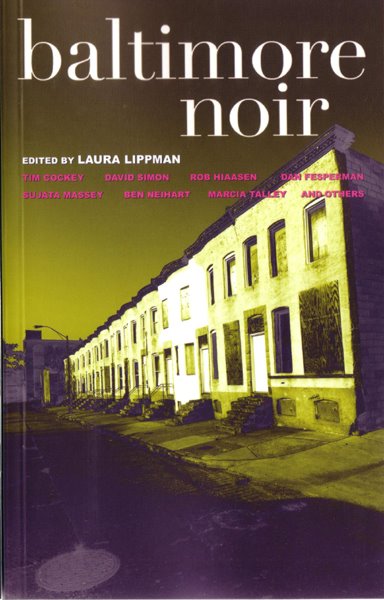
57. Baltimore Noir, ed. Laura Lippman. Short stories, 6-20, p. 291

Another in the City Noir Series from Akashic Books, this one featuring Charm City. Home Movies by Marcia Talley, Liminal by Joseph Wallace and Ode to the O’s by Charlie Stella join the submissions from Laura Lippman and Jim Fusili as standouts in this collection.

I think any of the books in the Akashic Noir Series are worth picking up both for the exposure they provide to a cast of largely unknown writers and for the tawdry view of notable American cities by the locals.

Friday, June 23, 2006

The Foreign Correspondent another triumph by Alan Furst

58. The Foreign Correspondent, Alan Furst. Espionage, 6-23, p. 273.

Most Americans today don’t understand how truly complex the world was in the late ‘30s and early ‘40s. For most of us, it lined up as the Americans and British against the Germans and Japanese. The French were occupied and the Italians were foolish.

That world's true complexity has all the impact of a major character in Alan Furst’s delicious new novel The Foreign Correspondent.

The correspondent is Carlo Weisz, an Italian émigré, living in Paris where he works for Reuters and is editor of a small, liberal anti-Fascist newspaper.

Weisz’s complicated life grows increasingly more complicated. His lover, a German aristocrat, refuses to leave Berlin, despite the growing threat to her life. Both the Italian secret police and the British are after Weisz; the Italians want to stop him, the British want the small newspaper to become a large one.

Furst is a widely successful novelist for two reasons: He is a gifted storyteller who has a master's command of tone and pacing and his easy familiarity with the period leading up to the Second World War is impressive in scope. The Foreign Correspondent is riveting; the pacing meticulous, measured, breath-taking. From his familiarity with various languages to his knowledge of the Italian equivalent of Life magazine, Furst immerses the reader in the France, Germany and Italy of the late ‘30s

The Foreign Correspondent is another triumphant foray into the troubled European past. Bravo, Signore Furst.

"What Are You Reading Now?"--A Report From The Field

So, I asked friends and family, “What are you reading now?”

My son, Brandon, is reading Gödel, Escher, Bach: An Eternal Golden Braid by Douglas R. Hofstadter. Amazon.com reports that “besides being a profound and entertaining meditation on human thought and creativity, this book looks at the surprising points of contact between the music of Bach, the artwork of Escher, and the mathematics of Gödel.”

"Why," I wonder, "is this of interest to my son?" and then I discover that, according to Amazon.com, “It also looks at the prospects for computers and artificial intelligence (AI) for mimicking human thought.”

This explains Brandon’s interest--he is a computer game designer and programmer.

Kansas buddy Jerry Lonergan is reading the following:

  • The Porteus Effect by Ann Parson (history of stem cell research pretty fascinating stories)
  • Haunted by Chuck Palahniuk (pretty bizarre/stomach turning stuff but for some reason quite good – he wrote Fight Club)
  • Guests of the Ayatollah by Mark Bowden (we have talked about this)

“Back home in Topeka,” Jerry writes, “I am re-reading a wonderful book about Josh Gibson--The Power and the Darkness by Mark Ribowsky.

Also in Kansas, Randy Osborne is reading Charles Higham’s Trading with the Enemy The Nazi - American Money Plot 1933-1949. Randy is a blue-collar worker with the book list of an intellectual. Because of his work schedule he doesn’t get to read many books, but he makes every book count.

In Sacramento, California, Mark Beach is reading Armadillo by William Boyd. On the East Coast, in New York City, Beth Finkel is reading “that Marley dog book. Totally relaxing!” Beth is referring to Marley & Me by John Grogan. I recommend Colter The True Story of the Best Dog I Ever Had by Rick Bass.

Back in Kansas, Rex Buchanan is reading a collection of Amy Hempel short stories. “I've also started this book A War Like No Other, a discussion of the Peloponnesian War in light of recent events. What little I've read so far is real interesting, but it's slow going.

"I read this book about obituaries, The Dead Beat, by Marilyn Johnson. It was pretty good. And the book River of Doubt about Teddy Roosevelt's trip in South America, which was a real page turner. I read Dylan's Chronicles on the plane on the way back from Washington, D.C., in March.”

Rex, I agree about River of Doubt. It was one of my “Best Reads” last year. Dylan’s Chronicles is on my reading list.

Thursday, June 22, 2006

12 Books About Science You Should Read Before You Die

Rex Buchanan has developed a list of “12 books about science you should read before you die.”

A personal friend, Rex is co-author of Roadside Kansas: A Guide to its Geology and Landmarks, editor of Kansas Geology: An Introduction to Landscapes, Rocks, Minerals, and Fossils and associate director for public outreach at the Kansas Geological Survey.

12 BOOKS ABOUT SCIENCE YOU SHOULD READ BEFORE YOU DIE
  • Edward Abbey, Desert Solitaire, 1985.
  • Rick Bass, Oil Notes, 1995.
  • Susan Clancy, Abducted: How People Come to Believe They were Kidnapped by Aliens, 2005.
  • Christopher Cokinos, Hope is the Thing with Feathers: A Personal Chronicle of Vanished Birds, 2001.
  • Jared Diamond, Collapse: How Societies Choose to Fail or Succeed, 2005.
  • Stephen Jay Gould, Wonderful Life: The Burgess Shale and the Nature of History, 1990.
  • Barry Lopez, Crossing Open Ground, 1989.
  • Charles Mann, 1491: New Revelations of the Americas Before Columbus, 2005.
  • Peter Matthiessen, The Snow Leopard, 1987.
  • David Quammen, The Song of the Dodo: Island Biogeography in an Age of Extinction, 1997.
  • Oliver Sacks, The Man Who Mistook His Wife for a Hat, and other Clinical Tales, 1970.
  • Terry Tempest Williams, Refuge: An Unnatural History of Family and Place, 1992.
I’ve read Oil Notes, Collapse, The Song of the Dodo and Hope is the Thing with Feathers and can recommend these books. In fact, I can recommend just about anything by Bass, although I do prefer his non-fiction to his fiction.

Lopez, Matthiessen and Sacks are also authors who I’ve read and can recommend. Matthiessen is among those rare writers whose fiction is as good as his non-fiction.

Wednesday, June 21, 2006

Angell on the Botsford Library

In one of my favorite passages in his collection of essays, Let Me Finish, Roger Angell writes about The New Yorker editor Gardner Botsford. Angell fondly recalls Gardner’s Library “a unique selection of volumes never to be taken down and opened, never to be discussed, review, collated, or arranged?”

The library, Angell recalls, was comprised of books featuring “a sweep of unexpected subject matter and the acute seriousness of certain obscure authors—which, when combined, promised extremely low sales.”

Botsford’s collection includes The Law and Your Dog, Septic Tank Practices, Successful Fund Raising Sermons, The Handbook of Wrestling Drills and What Can I Do with My Juicer?

"'I don’t believe there’s as much of this kind of publishing anymore,' Botsford said to a visitor. 'The special special book, the book with an audience of three—I don’t know where it’s gone.'”

Botsford told Angell that two broad principles governed the selection of the books in his small collection. There were to be no joke titles and no work that didn’t bear it’s title on the spine. “'That’s because no one will ever open any of the books,' he (Botsford) said. 'They are not for reading. Some people don’t understand this.'”

The passage on the Botsford Library can be found on pages 250-252 of Angell’s fine book.

Monday, June 19, 2006

Harrison a muscular, romantic writer

56. Sundog, Jim Harrison. Fiction, 6-19, p. 241

Harrison is a muscular writer and a romantic, sort of a second-tier Hemingway (and that’s no faint praise). Sundog, a story about “a man totally free of the bondage of the appropriate,” is standard Harrison fare; peppered with references to food and sex, manly work (building bridges and dams), exotic travels, the theory and practice of rivers and man’s efforts to escape his physical limitations.

Part of his appeal is that Harrison struggles to escape the limitations of a writer. Not his limitations, but the limitations of paper and words in attempting to convey a story of the human heart and mind and spirit. Harrison writes with a boldness that keeps you reading even if the concept of the story is improbable.

Saturday, June 17, 2006

Catching up--From Alentejo Blue to Clemente

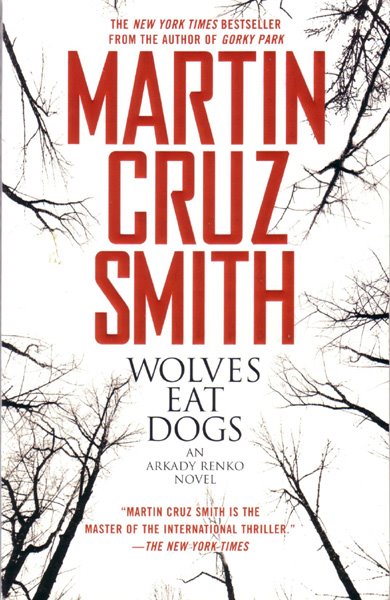
  • 50. Wolves Eat Dogs, Martin Cruz Smith. Fiction, 5-30, p. 336
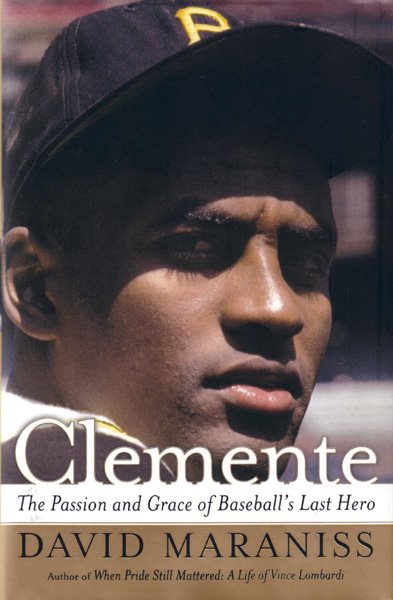
  • 51. Clemente, David Maraniss. Baseball, 5-31, p. 354
  • 52. The Hard Way, Lee Child. Thriller, 6-1, p. 371
  • 53. Let Me Finish, Roger Angell. Memoir, 6-4, p. 302
  • 54. Four Souls, Louise Erdrich. Fiction, 6-8, p. 210
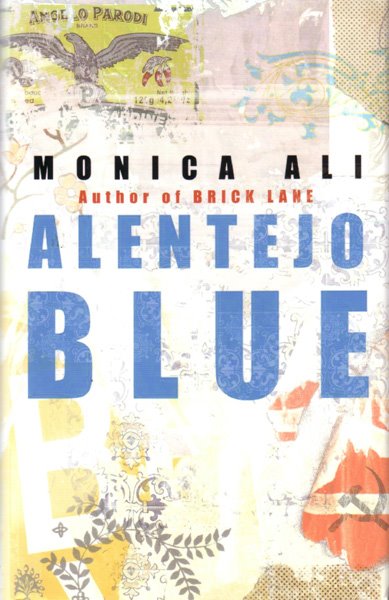
  • 55. Alentejo Blue, Monica Ali. Fiction, 6-14, p. 299

OK, I’m shamefully six books behind on posts. I can only offer excuses including an influx of family for 10 days and work-related travel.

Here’s a quick summary of the six:

Wolves Eat Dogs, Martin Cruz Smith. Arkady Renko ventures into Chernobyl’s Zone of Exclusion is this entertaining mystery. Renko warrants status as a classic figure in detective fiction. He would be honored in the United States for his integrity. In Russia, he’s scorned as a fool because he won’t take a bribe. Smith accurately captures Russia’s twisted version of capitalism.

Clemente, David Maraniss. This isn’t on the level of his earlier book on Vince Lombardi, When Pride Still Mattered. Maraniss doesn’t manage to penetrate Clemente’s inscrutable personality and I wanted more baseball instead of the abbreviated accounted we’re offered. Only time will tell, but I don’t think this will join Robert Creamer’s Babe as a baseball classic.

The Hard Way, Lee Child. Jack Reacher is back. That’s all I have to say. It’s terrific.

Let Me Finish, Roger Angell. I’ve read all seven of Angell’s baseball books, which are uniformly marvelous, I thought, because baseball writes. Turns out Angell writes too. Most of these pieces in this book originally appeared in The New Yorker. Whether you read them there first or are reading them for the first time – they’re superb. I especially liked the essay on his step-father, E.B. White.

Four Souls, Louise Erdrich. This is a follow-up to Erdrich’s Tracks. Tracks was fine. This book isn’t. I’ve tried and failed to identify what I don’t like about it. No matter, it doesn’t work. A rare miscue by Erdrich.

Alentejo Blue, Monica Ali. I greatly admired Ali’s first book, Brick Lane. This one, not so much. She’s trying to be something she’s not, including Gabriel Garcia Marquez. Nothing at all wrong with the prose, but the story is an uninspired mush.

Wednesday, June 07, 2006

Zadie Smith's On Beauty wins Orange Prize

John Ezard
Wednesday June 7, 2006
The Guardian

Zadie Smith's novel On Beauty last night triumphantly passed the "desert island" test of a good read by winning the £30,000 Orange prize for fiction. After a record three-hour judges' meeting, she narrowly beat exceptionally strong contenders by Hilary Mantel and Sarah Waters to take the first major literary award to match her prodigious celebrity.

She had the additional joy of finally winning the prize which first gave her recognition. She broke into the limelight as a 25-year-old when her debut - the exuberantly youthful, instantly bestselling White Teeth - was shortlisted for the Orange. On Beauty is the fruit of her early maturity and of her marriage to the poet Nick Laird.

The title had been around long enough to risk looking over-familiar and slightly bedraggled to judges. It came out in September, with its publisher's eyes on last year's Man Booker prize. However, it failed to win that or the subsequent Whitbread prize. Though it took the Eurasian honour in this year's Commonwealth Writers contest, the Orange was its last hope of a mainstream award.

The result leaves at least one of the defeated contenders, The Night Watch, Sarah Waters' story of heroism and love among women on blitz duty during the second world war, to go through with a formidable chance of winning this year's Man Booker or Whitbread in months to come.

On Beauty won the Orange partly because its familiarity worked in Smith's favour; the judges found it repaid repeated re-readings better than any of the five other works on the shortlist. The chief judge, Martha Kearney, Newsnight editor and Woman's Hour presenter, said: "One judge said at our meeting, 'If you are looking for one book to take to a desert island, that has to be the one'.

"Not everyone was persuaded of its merits. But I think two judges felt that, the more you read On Beauty, the more you found in it. It was an exceptionally good shortlist and everyone had a lot to say. It got very difficult narrowing the choice."

The judges' formal accolade said: "This is a book which combines extraordinary characterisation with skilful and seemingly effortless plotting. It ranges from exposing the intimacies of family life to broader themes of aesthetics, ethics and the vagaries of academe in a literary tour de force."

Kate Mosse, Orange prize co-founder, said: "It was a quite staggeringly high standard of debate - and no arguments at all among the judges."

It was also remarkable that four on the shortlist - Zadie Smith, Mantel, Waters and Ali Smith for The Accidental - were recognised as "leading writers in English literature the world over" though they had published so few novels.

The result pleased bookshops, where the winner has already done well. Jasper Sutcliffe, senior fiction buyer at Foyles of London, called On Beauty "an immensely stylish and evocative novel which confirms Zadie Smith as one of our brightest literary stars.

"Her gift for character is remarkable and should convince anyone who has dismissed her as overhyped in the past. Zadie has one eye on contemporary life and the other on literary heritage. A lethal combination."

The story, about an African-American-English academic family at loggerheads, has been called a cross between Malcolm Bradbury and EM Forster. It is Smith's homage to Forster, on whom she has written a long critical study. Through Forster, the novel explores the Bloomsbury group's sense of the "interiority" of human beings as they intersect with the public selves of other people, and with society.

Simon Robertson, chief fiction buyer for Waterstone's, said: "To attempt to bring a novel of the scope and power of Howard's End into the 21st century is an incredibly brave thing to do, but she manages. We are thrilled to see Zadie Smith receiving this long deserved recognition. On Beauty is a wonderful novel, proving beyond doubt that the promise of White Teeth was no fluke.

"Zadie has had remarkable commercial success from day one, but I think this - long deserved - seal of approval will prove very popular with our customers."

Hilary Mantel's Beyond Black - unofficial runner-up to On Beauty - is by an author often considered to have touches of genius. It is a mordant comedy about a genuine spirit medium who is haunted by the psychic remains of those who abused or cared for her as a child.

Also shortlisted were Everyman's Rules for Scientific Living, by Carrie Tiffany, and Nicole Krauss's The History of Love.

Monday, June 05, 2006

Free-Press tells us "How to sell a book"

“How to Sell a Book” was the headline on an interesting article by Marta Salij in the Sunday, June 4, Detroit Free-Press.

In an occasional series, Salij promises to give us a behind-the-scenes perspective on how someone can get a book published. To do so, she’s pitching her own novel and writing about the experience.

The initial article is about Salij’s experience at the fourth annual BookExpo America/Writer’s Digest Book Writers Conference. Held last month in Washington, D.C. , the conference is a one-day boot camp for literary hopefuls.

A few interesting tidbits from Salij’s article:

  • About 80 percent of all Americans believe they have a book in them.

  • About six million of those have manuscripts.

  • Agents say they take only about two out of every 1,000 manuscripts submitted. Fewer than that get published.

  • In 2005, 172,000 titles were published in the U.S. By comparison, an all-time high of 190,000 books were published in 2004 and 115,000 in 2001.
I know at least one person with a manuscript in his desk drawer and suspect I know many more.

Thursday, May 25, 2006

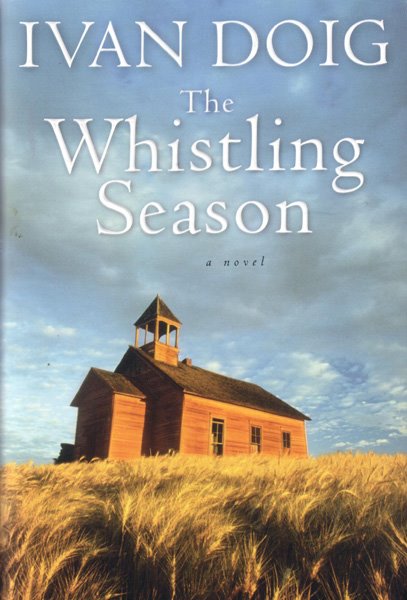
Doig Shines in Newest Novel -- The Whistling Season

49. The Whistling Season, Ivan Doig. Fiction, 5-25, p. 345

Imagine a novel in which the sense of time and place are as vivid and as realized as the characters. And the characters are so neatly drawn that you feel as if you could sit down at the kitchen table with them, across the expanse of a faded oilcloth, one with blue windmills on white squares, and share coffee and conversation.

If you can imagine this, you have sense of Ivan Doig’s newest book, The Whistling Season. Often categorized, and dismissed, as a Western writer, Doig is among our finest fiction writers today, and this may be the book that secures him a wider audience. If his most recent works, such as Prairie Nocturne and Mountain Time, were not of the caliber of his earliest efforts, The Whistling Season is Doig at his finest. It recalls such extraordinary novels as Dancing at the Rascal Fair and Ride With me, Mariah Montana.

Oliver Milliron and his three motherless sons – Paul, Damon and Toby – live on Montana’s Marias Coulee where Oliver is a dry-land farmer. The oldest son, Paul, a precocious 13-year-old, is the novel’s narrator.

The story begins when Oliver’s curiosity is aroused by a help wanted ad for a housekeeper that promises, Can’t Cook, But Doesn’t Bite. Oliver determines that a housekeeper may be exactly what’s needed to bring order to his tumultuous household.

The housekeeper, Rose Llewellyn arrives, her brother, Morris Morgan, in tow. Rose quickly restores order to the Milliron household, while Morris – Morrie – does the same at the one-room schoolhouse the boys attend. He is enlisted as the schoolteacher after the current eacher, the unattractive Miss Trent, unexpectedly elopes with a traveling preacher.

Most of the novels unfolds within the walls of the schoolhouse. If that sounds as if it’s too narrow a geography for a novel, under Doig’s care, it’s not. The schoolhouse and its grounds emerge as a world complete unto itself.

Doig sings the praises of the one-room schoolhouse, but he’s never pedantic or preachy. His greatest skill as a novelist is that he values a good story and knows how to tell one.

If it doesn’t make you laugh outright, The Whistling Season will conjure more than its share of knowing grins. And it can, at times, generate as much warmth as the pot-bellied stove that was a fixture in the one-room schoolhouse Doig so fondly re-creates.

Tuesday, May 23, 2006

Erdrich Shines as Children's Book Author; Gelb rewards the patient reader

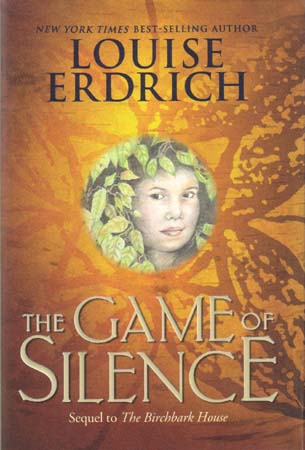
47. The Game of Silence, Louise Erdrich. Fiction, 5-19, p. 248

Like Carl Hiaasen, Louise Erdrich is as successful writing for children as adults.

Told through the eyes of a pre-adolescent Ojibwe girl, The Game of Silence is the sequel to her superb The Birchbark House. Erdrich combines a compelling narrative with a sensitive portrayal of native American life.

It’s a great book for children 10-12 years of age—especially girls, because the protagonist is such a strong, vivid character with both faults and special gifts.

----------------------------

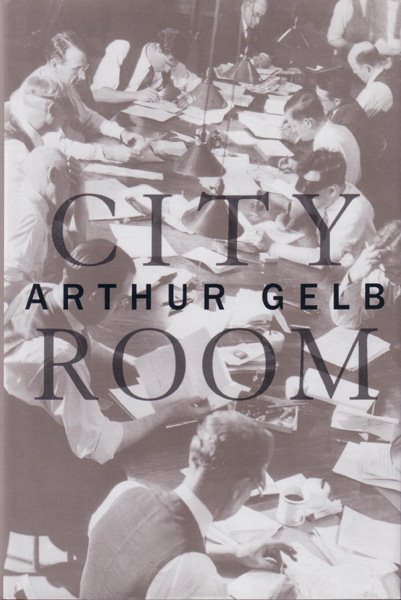
48. City Room, Arthur Gelb. Journalism, 5-21, p. 641

Dense at 641 pages, Arthur Gelb’s City Room requires, but ultimately rewards, a patient reader. Gelb spent his entire journalistic career at the New York Times, beginning as a copy boy and working his way up the managerial ladder, notably serving as metro editor for many years.

Gelb’s newspaper career began when a journalism degree was frowned on by reporters and editors. It ended as newspapers began to lose readers and advertisers to television and the Internet.

Gelb gives us an inside peek at Times’ operations as well as taking along on a personal tour of some of the major news events of the past half century. It’s a fascinating journey.

Sunday, May 21, 2006

My Best Books of the Past 25 Years

Recently, in an intriguing and controversial article, the New York Times, surveyed critics, authors and editors in an effort to determine the best American fiction of the past 25 years.

It was largely a futile effort, but interesting for all that.

The honor of best American fiction in the past 25 years was bestowed on Toni Morrison’s Beloved. Don DeLillo’s Underworld, Cormac McCarthy’s Blood Meridian, John Updike’s four Rabbit Angstrom novels and Philip Roth’s American Pastoral were runners up.

Underworld would receive a vote from me. I’d also include McCarthy, but I prefer All The Pretty Horses, the first book in his Border Trilogy. I didn’t especially like Beloved and I’m a not a huge fan of either Updike or Roth.

So, in no particular order, I’ve listed a few books that I consider to be among the very best I’ve read in the past 25 years.

  • Dinner at the Homesick Restaurant and Morgan’s Passing, Anne Tyler
  • The Sea Runners, English Creek and Dancing at the Rascal Fair, Ivan Doig
  • The Things They Carried, Tim O’Brien
  • A Thousand Acres, Jane Smiley
  • A Good Scent From A Strange Mountain, Robert Olen Butler
  • All the Pretty Horses, Cormac McCarthy
  • Billy Bathgate, E.L. Doctorow
  • The Sportswriter, Richard Ford
  • Mohawk and Empire Falls, Richard Russo
  • The Painted Drum, Louise Erdrich
  • Ship Fever and Other Stories, Andrea Barrett
  • Underworld, Don DeLillo
  • Cold Mountain, Charles Frazier
  • Girls and The Night Inspector, Frederick Busch
  • The Hours, Michael Cunningham
  • Charming Billy, Alice McDermott
  • The Shipping New, Annie Proulx
  • Plainsong and Eventide, Kent Haruf
  • The Amazing Adventures of Kavalier & Clay, Michael Chabon
  • Roscoe, William Kennedy
  • Drop City, T.C. Boyle
  • Gilead, Marilynne Robinson
  • Bel Canto, Ann Patchett.

I’d also add the works of Laurie Colwin and Jim Harrison to the list, although I have no particular titles to suggest. I prefer the short stories of both authors to their novels.